PUBLICATION

NSW Criminal Court Processes: A Practical Overview

"Understand NSW criminal court processes from arrest through sentencing. Our guide explains each stage clearly so you know what to expect."
NSW Criminal Court Processes: A Practical Overview

Facing criminal charges in NSW can feel overwhelming, especially when you don’t understand how the court system works. The NSW criminal court processes involve multiple stages, from your initial arrest through to sentencing and potential appeals.

We at Jameson Law have guided countless clients through these proceedings. This guide breaks down each step in plain language so you know what to expect.

How NSW Criminal Courts Are Structured

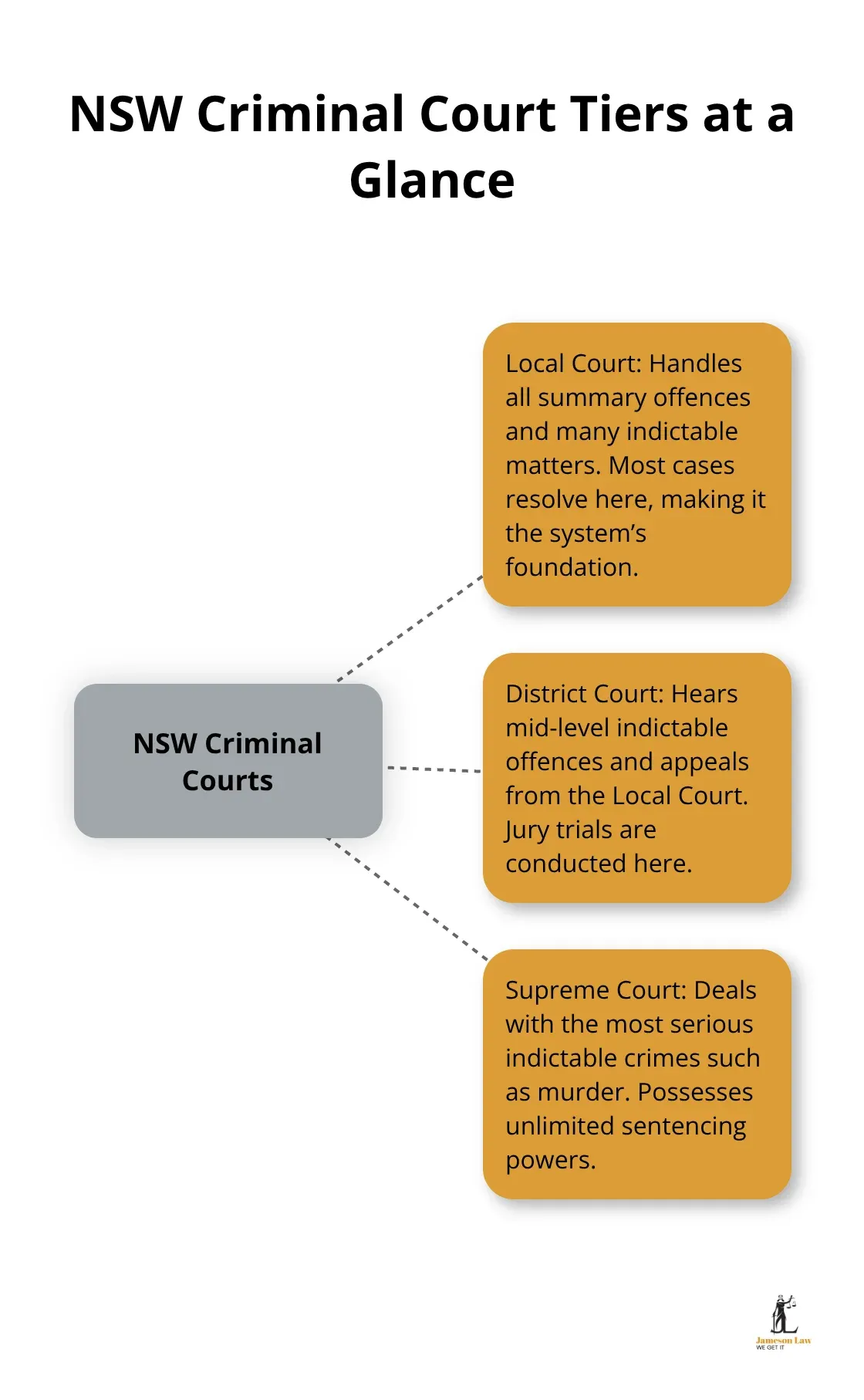
NSW operates a three-tier criminal court system, and knowing which court handles your case directly affects timelines, sentencing options, and your trial process. The Local Court sits at the entry point and handles all summary offences plus many indictable matters. According to NSW Bureau of Crime Statistics and Research, the vast majority of criminal cases resolve at this level, making the Local Court the practical foundation of the system.

Infographic showing Local, District and Supreme Courts and what each handles in NSW. - NSW criminal court processes

The District Court takes mid-level indictable offences and also hears appeals from the Local Court. The Supreme Court handles the most serious indictable crimes including murder, and possesses unlimited sentencing powers. This three-tier structure means your case will likely start in the Local Court, but serious charges can escalate upward depending on the offence type and prosecution decisions.

Where Your Specific Offence Gets Heard

The offence itself determines jurisdiction, not the seriousness you perceive. Summary offences stay in the Local Court with maximum penalties typically under two years imprisonment. Indictable offences can be heard in the District Court or Supreme Court, but here is where most people misunderstand the system: many indictable offences are actually finalised in the Local Court with the accused’s consent or the prosecution’s agreement. When you are charged, the police will tell you whether your matter is summary or indictable, and this classification directly shapes whether you face a magistrate alone or a judge and jury. Understanding this distinction early is essential because indictable cases follow different procedures, different timelines, and carry different sentencing ranges.

The People Who Make Decisions

Three key figures drive criminal proceedings. The magistrate presides over Local Court hearings and makes guilt or innocence decisions in summary matters. The Crown Prosecutor represents the state and bears the burden of proving guilt beyond reasonable doubt-this is not negotiable. Your defence lawyer (or you, if self-represented) challenges the Crown’s evidence and presents your case. In District and Supreme Court trials, a jury of twelve ordinary Australians decides guilt on indictable charges, while the judge manages procedure and later determines sentencing. The judge does not decide guilt in jury trials; the jury does. This separation of powers matters practically because juries can be persuaded by different arguments than magistrates, and jury trials take considerably longer than Local Court hearings.

What Happens Next in Your Case

The court that hears your matter shapes what comes next. If you face summary charges in the Local Court, your case moves quickly toward a hearing before the magistrate. If you face indictable charges, the Local Court first conducts a committal hearing to test whether sufficient evidence exists to proceed to a higher court. This gatekeeping function (the committal process) can end your case early if the Crown’s evidence falls short, or it can send you forward to the District or Supreme Court for trial. Understanding which pathway applies to your charges helps you and your legal representative plan your defence strategy and prepare for the months ahead.

From Arrest to Your First Court Appearance

What Happens in Police Custody

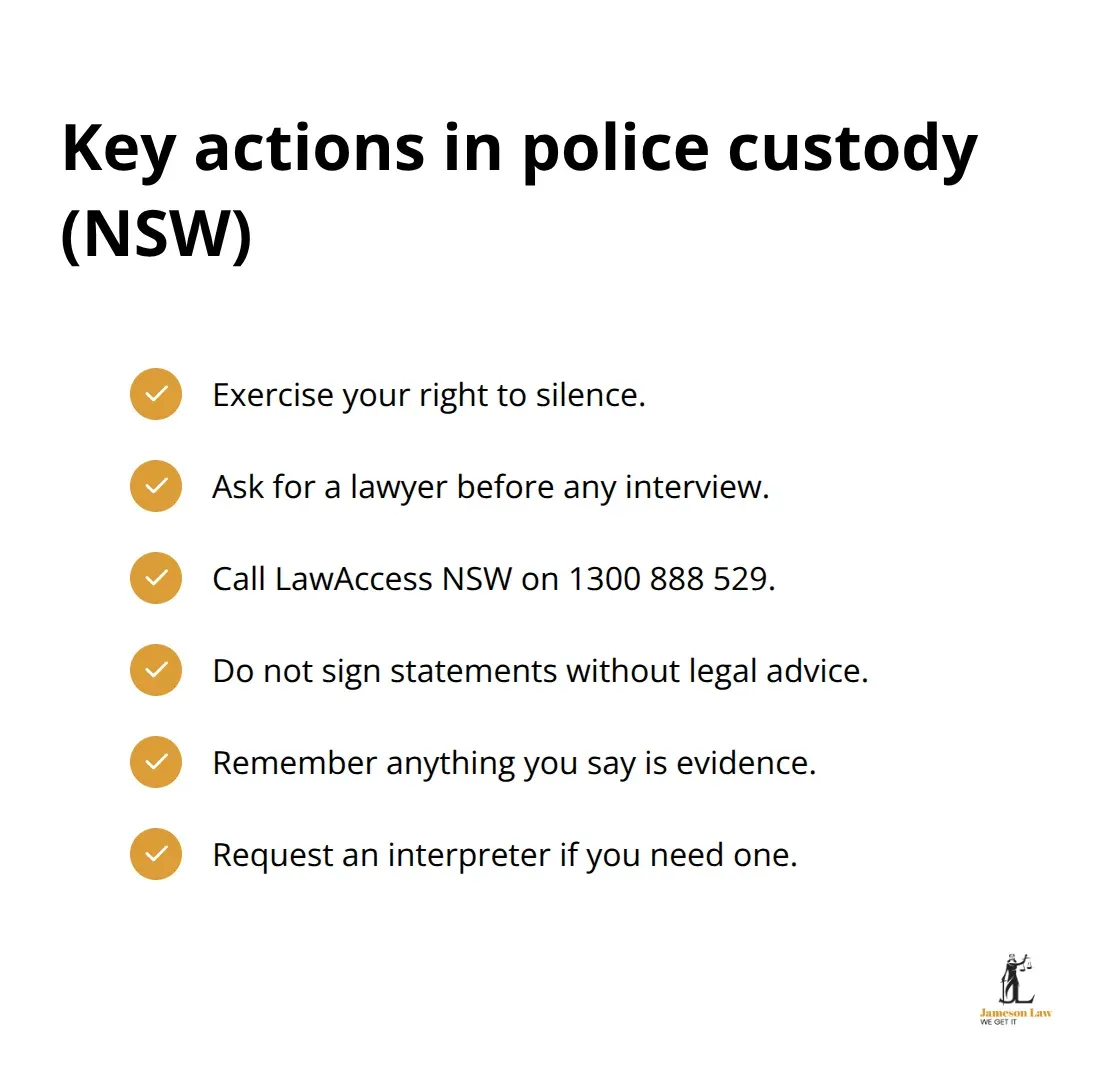
The moment police arrest you, the clock starts ticking on several critical decisions. Within hours of arrest, police must inform you of your rights, including your right to legal representation and remaining silent. Police will question you during custody, and anything you say becomes evidence in court. Most people make their first serious mistake at this point: speaking to police without a lawyer present. If you cannot afford a lawyer, contact LawAccess NSW on 1300 888 529 immediately. They assess your eligibility for legal aid and arrange representation before any police interview.

Checklist of what to do during police custody in NSW, including right to silence and calling LawAccess.

In most cases, you have the right to silence if police are investigating you, which means you don’t have to do an interview, provide a statement or talk to police. This distinction matters enormously for your defence strategy.

Understanding Bail Decisions

Bail decisions under the Bail Act 2013 NSW rest on three factors: whether you will appear in court, whether you pose a risk to public safety, and whether you might interfere with witnesses or evidence. The magistrate considers your community ties, employment history, family responsibilities, and criminal record when deciding bail. Strong employment, stable housing, and family support in NSW significantly improve your prospects. If bail is refused, you can apply again, and having a lawyer present at that hearing materially increases your chances of success. Bail conditions often include reporting to police weekly, surrendering your passport, or avoiding contact with alleged victims. Breaching these conditions creates fresh charges and can result in immediate arrest and forfeiture of your bail money. Treat conditions seriously; they are not suggestions.

Gathering Evidence and Preparing Your Defence

Once bail is sorted, your immediate task involves gathering evidence and preparing your defence. Find your Court Attendance Notice and the police facts sheet the prosecutor will rely on. If you lack these documents, contact the police station where you were charged or call Court Services on 1300 888 272. Write down your version of events in detail while memory is fresh, noting dates, times, locations, and any witnesses who can support your account. If you need an interpreter for court or legal appointments, Court Services can arrange one at no cost. Your lawyer will use this written account to identify weaknesses in the Crown’s case and plan cross-examination strategy.

Testing the Crown’s Case at Committal

For indictable charges, a committal hearing will occur in Local Court where the Crown must prove sufficient evidence exists to proceed to trial. This hearing is your chance to test the prosecution’s case early. Inconsistencies between what police say at committal and what they say later at trial can be used to challenge their credibility with a jury. Many cases are lost at committal because defendants fail to properly examine the Crown’s evidence. Gather any documents supporting your version: text messages, emails, receipts, photographs, or employment records. If witnesses support your account, speak to them now and ask if they will attend court. Some witnesses require subpoenas to compel attendance; your lawyer can arrange these.

Considering Plea Options Early

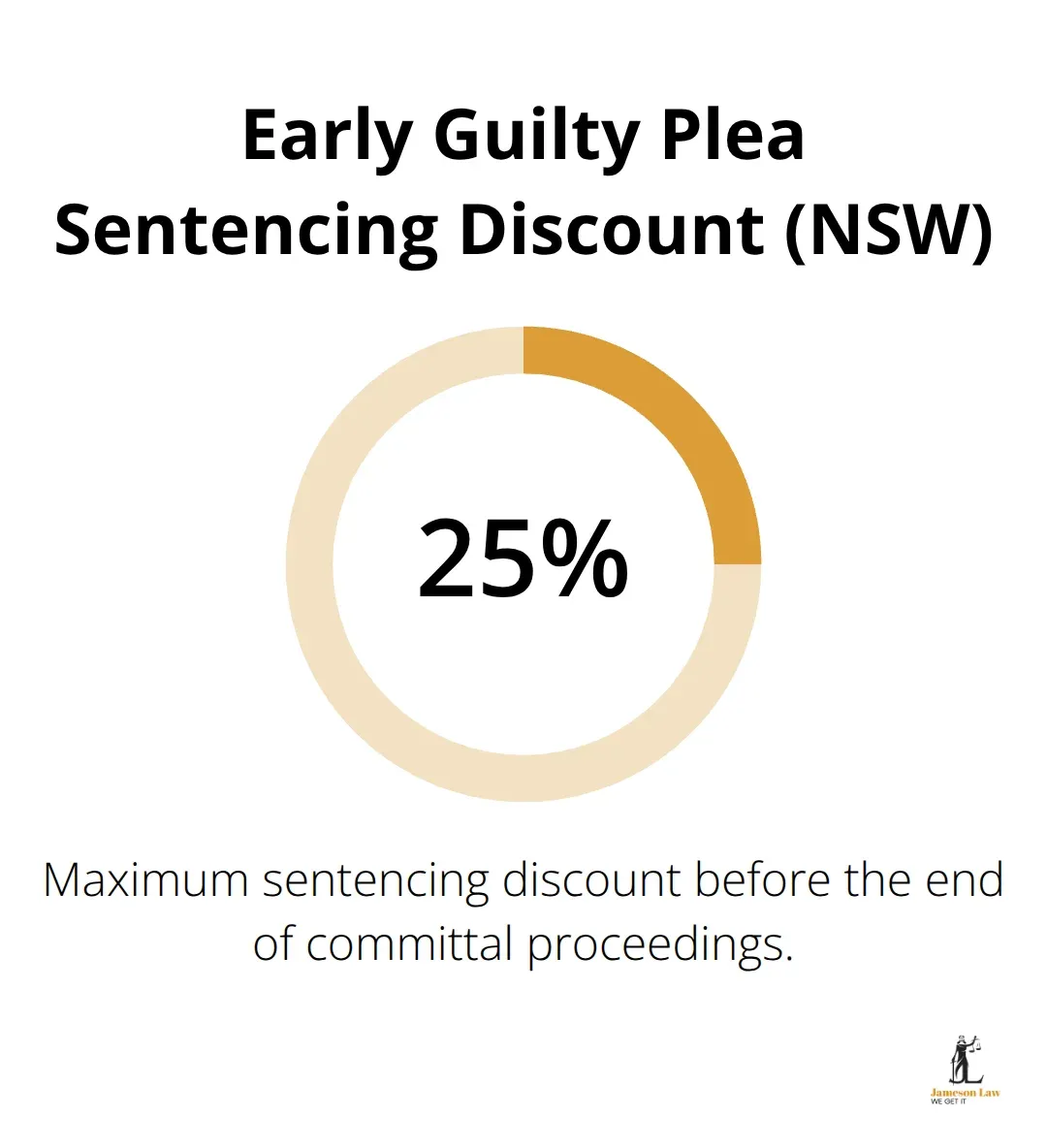
The Early Appropriate Guilty Plea reforms introduced in 2018 offer significant sentencing discounts for early guilty pleas, with discounts of up to 25 per cent available before the end of committal proceedings. If your case is weak, discussing plea options with your lawyer early can result in lower charges or shorter sentences than fighting at trial and losing. This assessment is not about guilt or innocence; it is about realistic evaluation of evidence and managing risk.

Chart highlighting the up to 25 per cent sentencing discount for early guilty pleas under NSW reforms. - NSW criminal court processes

Your lawyer will advise you on whether contesting the charges at trial or negotiating a plea serves your interests better. The strength of the Crown’s evidence, the seriousness of the charges, and your personal circumstances all factor into this decision. Once you understand your options and the evidence against you, you move toward either trial preparation or plea negotiations-both paths require active engagement with your legal representative.

What Happens After Sentencing

Sentencing Outcomes and Penalties

Once a magistrate or judge finds you guilty or you enter a guilty plea, sentencing follows immediately or within weeks depending on case complexity. The court considers your personal circumstances, criminal history, rehabilitation efforts, and the seriousness of the offence when determining your penalty. If you face a serious sentence, the court may order a Sentencing Assessment Report to examine your background, employment, family ties, and prospects for rehabilitation. Penalties range from fines to imprisonment depending on offence severity.

Preparing Your Case for Sentencing

Collect letters of support from employers, family members, or community organisations before sentencing; these documents demonstrate your ties to the community and willingness to change. Present evidence of completed treatment programs, counselling, or education courses you have undertaken since arrest. The magistrate or judge will read the police facts sheet and may allow you to dispute minor factual points if they affect sentencing, though major factual disputes require a separate hearing.

Managing Fines and Financial Penalties

Fines must typically be paid within 28 days; failure to pay triggers action by Revenue NSW and additional penalties accumulate quickly. If you cannot afford a fine, ask the court about a Work and Development Order, which allows eligible people to work off fines through community work rather than payment. This option provides a practical pathway for those facing financial hardship.

Community-Based Sentencing Options

Community-based sentencing offers a realistic alternative to gaol for many offences. Conditional Release Orders allow the court to release you on conditions without imprisonment, while Community Correction Orders require you to complete supervised work, rehabilitation programs, or other conditions in the community. Take these orders seriously because breaching them-missing appointments, failing drug tests, or not completing work hours-results in harsher penalties including possible imprisonment and referral to the Community Corrections or Parole Authority.

Appealing Your Sentence

You have 28 days from conviction or sentencing to lodge an appeal if you believe the sentence is manifestly excessive or the magistrate made a legal error, though extensions to three months are possible with District Court permission. Appeals are not automatic; you must have grounds such as errors of law or misapplication of legal principles, and legal aid for appeals is not guaranteed so contact LawAccess NSW on 1300 888 529 to discuss your prospects and eligibility. Support services exist after sentencing: the Witness Assistance Service, Justice Advocacy Service for people with cognitive impairment, and local Community Legal Centres provide ongoing guidance. If you are imprisoned, rehabilitation programs within correctional facilities and parole eligibility information become your focus for the months ahead.

Final Thoughts

The NSW criminal court processes move through distinct stages, each with its own requirements and consequences. Seeking legal representation early transforms your case because your lawyer identifies weaknesses in the Crown’s evidence, negotiates bail conditions, explores plea options with sentencing discounts, and prepares your defence properly. Contact LawAccess NSW on 1300 888 529 before your first police interview or court appearance-early legal advice changes outcomes.

Your next steps depend on where you stand in the process. If police have arrested you, obtain legal advice immediately; if you have a court date, gather your Court Attendance Notice and police facts sheet, then meet with your lawyer to plan your approach; if you have been convicted or sentenced, understand your appeal rights and timeframes within 28 days. Take community-based sentencing conditions seriously because breaching them creates fresh charges and harsher penalties that compound your original sentence.

We at Jameson Law guide clients through every stage of NSW criminal proceedings and understand the practical realities of the court system. Our team works to protect your rights and achieve the best possible outcome for your circumstances, whether you need advice on bail, trial preparation, sentencing strategy, or appeals. Experienced legal representation makes a measurable difference in how your case unfolds.

Speak to an Expert Lawyer today

Laywers-Jameson-Law-The-best-law-firm-in-Sydney- Sydney Lawyers - Sydney
BOOK NOW

WE'RE IN IT TO WIN IT

Book your consultation

Book Now
Book Now Mobile 06 02 2025

This form submission is encrypted and secured to ensure your information remains confidential.

What our Clients

Related Publications:

What our clients say

.

Jameson Law - Voted the Best Law firm in Sydney Award

Legal Answers ... In Short

We're here to help

Our mission is to ensure our client matters are resolved successfully every time. Success to us does not simply involve winning, but moreover ensuring we take the most feasible, economic and stress-free path to help our clients achieve their goals. We fight hard for our clients, and always go by the motto: we’re in it to win it.

Jameson Law - Best Law Firm in Sydney

WE'RE IN IT TO WIN IT

Book your consultation

Call us now on (02) 8806 0866 or fill out the form below

Book Now Mobile

This form submission is encrypted and secured to ensure your information remains confidential.

WE'RE IN IT TO WIN IT

Book your consultation

Book Now Mobile 06 02 2025
lock

This form submission is encrypted and secured to ensure your information remains confidential.

Our Sydney Offices

Offices Parramatta and Sydney Jameson Law
Parramatta CBD - Head Office
jameson Law - Blacktown
jameson Law - Liverpool Office
Jameson Law - Bankstown
Court Houses We Frequent Jameson Law

Court Houses We Frequent

Balmain Local Court

Registry: Monday to Friday, 9:00am to 4:30pm

Bankstown Local Court

Court Operating Hours: 9:30am-4:30pm

Blacktown Local Court

Registry Hours: 9:00 – 4:30
Telephone Hours: 8:30 -4:30
Days open: Mon-Fri

Burwood Local Court

Registry Hours: 9:00 – 4:30
Telephone Hours: 8:30 – 4:30
Days open: Mon – Fri

Campbell Local Court

Registry Hours: 9:00 – 4:30
Telephone Hours: 8:30 – 4:30
Days open: Mon – Fri

Central Local Court

Registry Hours: 9:00 – 1:00 and 2:00 – 4:30
Telephone Hours: 8:30 – 4:30

Downing Local Court

Registry Hours: 9:00 – 1:00 and 2:00 – 4:30
Telephone Hours: 8:30 – 4:30

Wollongong Local Court

Registry Hours: 9:00 – 1:00 and 2:00 – 4:30
Telephone Hours: 8:30 – 4:30

Fairfield Local Court

Registry Hours: 9:00 – 1:00 and 2:00 – 4:30
Telephone Hours: 8:30 – 4:30

Hornsby Local Court

Registry Hours: 9:00 – 1:00 and 2:00 – 4:30
Telephone Hours: 8:30 – 4:30

Liverpool Local Court

Registry Hours: 9:00 – 1:00 and 2:00 – 4:30
Telephone Hours: 8:30 – 4:30

Manly Local Court

Registry Hours: 9:00 – 1:00 and 2:00 – 4:30
Telephone Hours: 8:30 – 4:30

Newtown Local Court

Registry Hours: 9:00 – 1:00 and 2:00 – 4:30
Telephone Hours: 8:30 – 4:30

Parramatta Local Court

Registry Hours: 9:00 – 1:00 and 2:00 – 4:30
Telephone Hours: 8:30 – 4:30

Penrith Local Court

Registry Hours: 9:00 – 1:00 and 2:00 – 4:30
Telephone Hours: 8:30 – 4:30

Sutherland Local Court

Registry Hours: 9:00 – 1:00 and 2:00 – 4:30
Telephone Hours: 8:30 – 4:30

Waverley Local Court

Registry Hours: 9:00 – 1:00 and 2:00 – 4:30
Telephone Hours: 8:30 – 4:30

Windsor Local Court

Registry Hours: 9:00 – 1:00 and 2:00 – 4:30
Telephone Hours: 8:30 – 4:30

Wollongong Local Court

Registry Hours: 9:00 – 1:00 and 2:00 – 4:30
Telephone Hours: 8:30 – 4:30

Downing Centre District Court

Registry Hours: 9:00 – 4:30
Telephone Hours: 8:30 – 4:30
Days open: Mon – Fri

Parramatta District Court

Registry Hours: 9:00 – 4:30
Days open: Mon-Fri

Penrith District Court

Registry Hours: 9:00 – 4:30
Days open: Mon-Fri

Campbelltown District Court

Registry Hours: 9:00 – 4:30
Days open: Mon – Fri

Liverpool District Court

Registry Hours: 9:00 – 4:30
Days open: Mon – Fri

Wollongong District Court

Registry Hours: 9:00 – 1:00 and 2:00 – 4:30
Telephone Hours: 8:30 – 4:30

Supreme Court New South Wales

Registry Hours: 9:00 AM – 4:30 PM
Telephone Hours: 8:30 AM – 4:30 PM
Days Open: Monday to Friday

Federal Circuit and Family Court of Australia

Registry Hours: 9:00 AM – 4:30 PM
Telephone Hours: 8:30 AM – 5:00 PM
Days Open: Monday to Friday

Federal Court

Monday to Friday, 8:30 AM – 4:30 PM

High Court

Monday to Friday, 8:30 AM – 5:00 PM

Children’s Court of New South Wales

Registry Hours: 9:00 AM – 4:30 PM
Telephone Hours: 8:30 AM – 4:30 PM
Days Open: Monday to Friday

Coroner’s Court New South Wales

Registry Hours: 9:00 AM – 4:30 PM
Telephone Hours: 8:30 AM – 4:30 PM
Days Open: Monday to Friday

Industrial Relations Commission of New South Wales

Registry Hours: 9:00 AM – 4:30 PM
Telephone Hours: 8:30 AM – 4:30 PM
Days Open: Monday to Friday

Land and Environment Court of New South Wales

Registry Hours: 9:00 AM – 4:30 PM
Telephone Hours: 8:30 AM – 4:30 PM
Days Open: Monday to Friday

WE'RE IN IT TO WIN IT

Book your consultation

Book Now
Book Now Mobile 06 02 2025
lock

This form submission is encrypted and secured to ensure your information remains confidential.