PUBLICATION

Can You Fight a Shoplifting Charge Successfully

"Defend yourself against theft charges NSW. Learn what evidence prosecutors need, common defences, and how to challenge shoplifting accusations effectively."
Can You Fight a Shoplifting Charge Successfully

A shoplifting charge can feel overwhelming, but you have more options than you might think. At Jameson Law, we’ve helped many clients navigate theft charges in NSW and understand their legal position.

The outcome of your case depends heavily on the evidence against you and the defence strategy you choose. This guide walks you through what the prosecution must prove, the defences available to you, and the practical steps to take next.

What the Prosecution Must Prove in a Shoplifting Case

The Seven Elements of Larceny

The prosecution carries the burden of proving every element of the offence beyond reasonable doubt. In NSW, shoplifting falls under larceny, which requires the state to establish seven specific elements. They must show you took the property. They must prove the property belonged to someone else. They must demonstrate you had no permission to take it. They must establish you intended to permanently deprive the owner of it. They must show you had no valid claim of right to the item. They must prove you acted dishonestly. They must confirm you actually took possession of it.

Seven concise elements prosecutors must prove for a larceny charge in NSW. - Theft charges NSW

This is where many prosecutions weaken. If the prosecution fails to prove any single element beyond reasonable doubt, the charge must fail.

Why Dishonesty Matters Most

The dishonesty element separates accidental taking from criminal conduct. Someone who genuinely believed they had permission to take an item, or who made an honest mistake about ownership, may not have acted dishonestly at all. This distinction can dismantle the entire prosecution case.

CCTV footage is often used as prosecution evidence, but video alone cannot establish intent or dishonesty. You need to examine whether the footage actually shows what the prosecution claims. Poor camera angles, unclear images, or missing sections can create reasonable doubt about what actually occurred.

How Penalties Vary by Circumstances

In NSW, a stealing charge heard in the Local Court carries a maximum penalty of two years imprisonment and/or a fine. However, the actual penalty you face depends entirely on the value of goods involved, your criminal history, and aggravating factors. First-time offenders with low-value thefts receive vastly different sentences than repeat offenders or those involved in organised shoplifting.

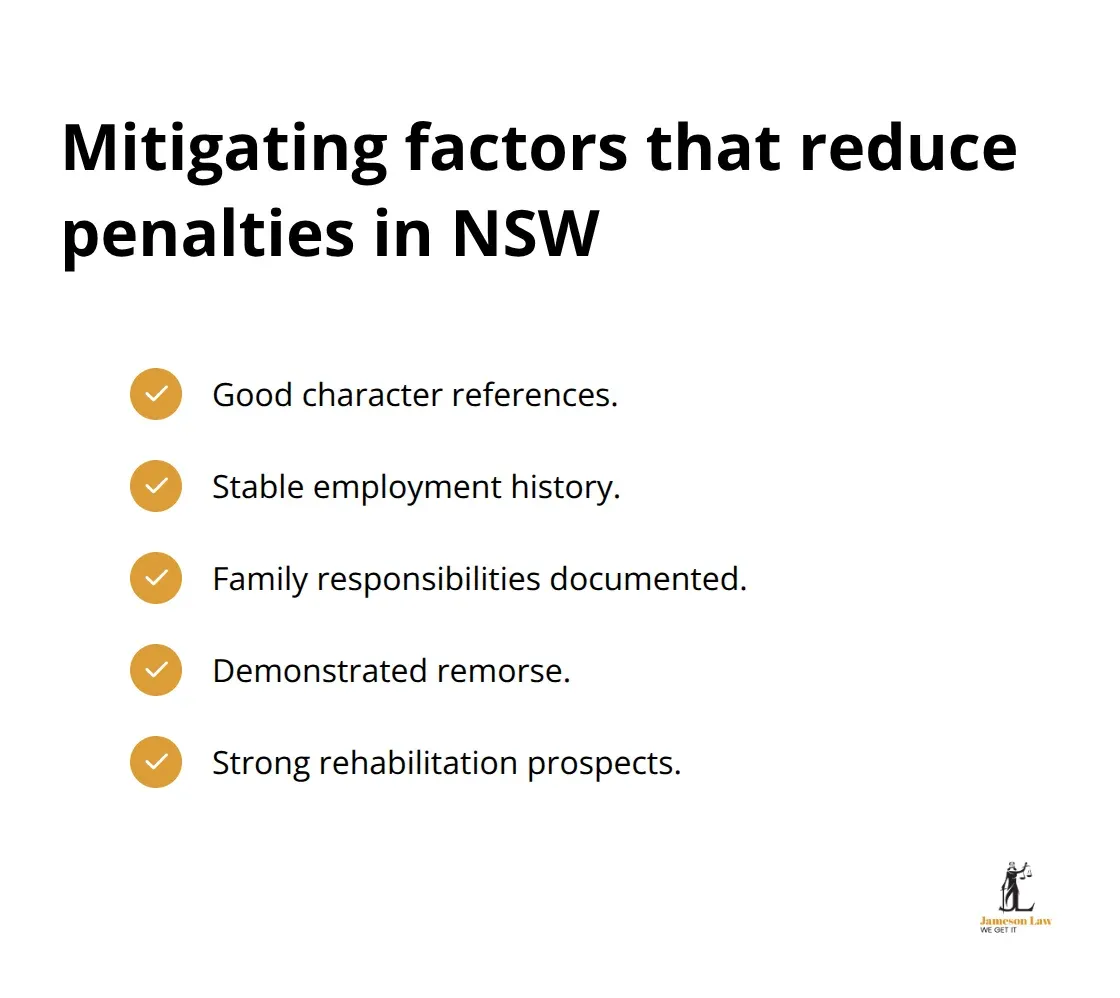
A single item worth under $200 looks completely different to a court than coordinated theft of expensive goods. Mitigating factors work in your favour here. Good character, stable employment, family responsibilities, remorse, and rehabilitation prospects all reduce penalties significantly. First-time offenders are treated far more leniently than those with prior convictions.

Key mitigating factors that can lower penalties for shoplifting in NSW.

The Real Cost of a Conviction

The court system recognises that a permanent criminal record can destroy employment prospects across retail, finance, healthcare, education, and security sectors. This is why fighting the charge or seeking alternatives to conviction matters so much. A conviction stays on your police record permanently and appears on all standard police checks for employment.

The consequences extend beyond the courtroom. Your visa eligibility, professional licences, and future opportunities all face potential damage. Understanding what defences might apply to your situation becomes critical at this point.

What Defences Can Dismantle a Shoplifting Charge

Attacking the Dishonesty Element

The prosecution’s burden to prove dishonesty beyond reasonable doubt creates real vulnerabilities in their case. Dishonesty is not automatic when you take something from a shop. If you genuinely believed you had permission to take an item, or if you made an honest mistake about ownership or payment, the dishonesty element collapses entirely. This distinction matters because the entire larceny charge depends on it.

CCTV footage cannot show what was in your mind at the moment you took the item. Video evidence shows movement and actions, not intent or mental state. A prosecution relying solely on camera footage faces a significant gap in proving the dishonesty component. If the footage is unclear, the angles are poor, or sections are missing, that gap widens considerably.

Obtaining and Examining Video Evidence

You should obtain and carefully examine all available CCTV before your first court appearance. Poor image quality, obstructed views, or timestamps that don’t align with witness statements can create reasonable doubt about what actually happened. Request full disclosure of all video footage from police-not just the segments they plan to use. Missing footage or gaps in the recording timeline often reveal investigative shortcuts that undermine the prosecution’s narrative.

Challenging Eyewitness Identification

Mistaken identity and false accusation occur more frequently than many people realise. Eyewitness identification in retail environments is notoriously unreliable, particularly during busy trading hours when staff are distracted. Store employees may identify the wrong person based on clothing description alone, or confuse similar-looking customers. Police may also fail to properly investigate alternative suspects or dismiss contradictory evidence.

Exposing Procedural Failures

Procedural failures during the investigation phase can undermine the prosecution’s case significantly. If police failed to properly preserve evidence, contaminated the chain of custody for items seized, or failed to follow proper interview procedures, those failures create grounds to challenge the evidence’s reliability. Did police provide you with a caution before questioning? Did they record your interview? Were you offered access to a lawyer? These procedural safeguards exist because violations can render evidence inadmissible or unreliable.

Additionally, if the prosecution’s timeline doesn’t match the evidence, or if witness statements contradict each other, those inconsistencies must be exposed. Acting quickly to obtain legal representation allows your lawyer to request full disclosure of police evidence within the first few weeks after charging. This early access to the prosecution’s case gives you time to identify weaknesses, locate alternative witnesses, and develop your defence strategy before your first court date. The strength of your defence often depends on how thoroughly you examine the evidence against you and how quickly you move to challenge it.

Your Options When Facing a Shoplifting Charge

Three Pathways Forward

When you’re charged with shoplifting, you face three distinct pathways forward, and the decision you make in the first few weeks determines whether you walk away conviction-free or carry a permanent criminal record. The prosecution’s case strength varies enormously depending on evidence quality, witness reliability, and procedural compliance. Most people assume they must either plead guilty immediately or fight everything in court, but the reality offers far more nuanced options that can dramatically improve your outcome. The window to act effectively closes quickly-within 4 to 8 weeks of being charged, you need legal advice in place, evidence gathered, and a strategy decided.

Negotiating with Prosecutors

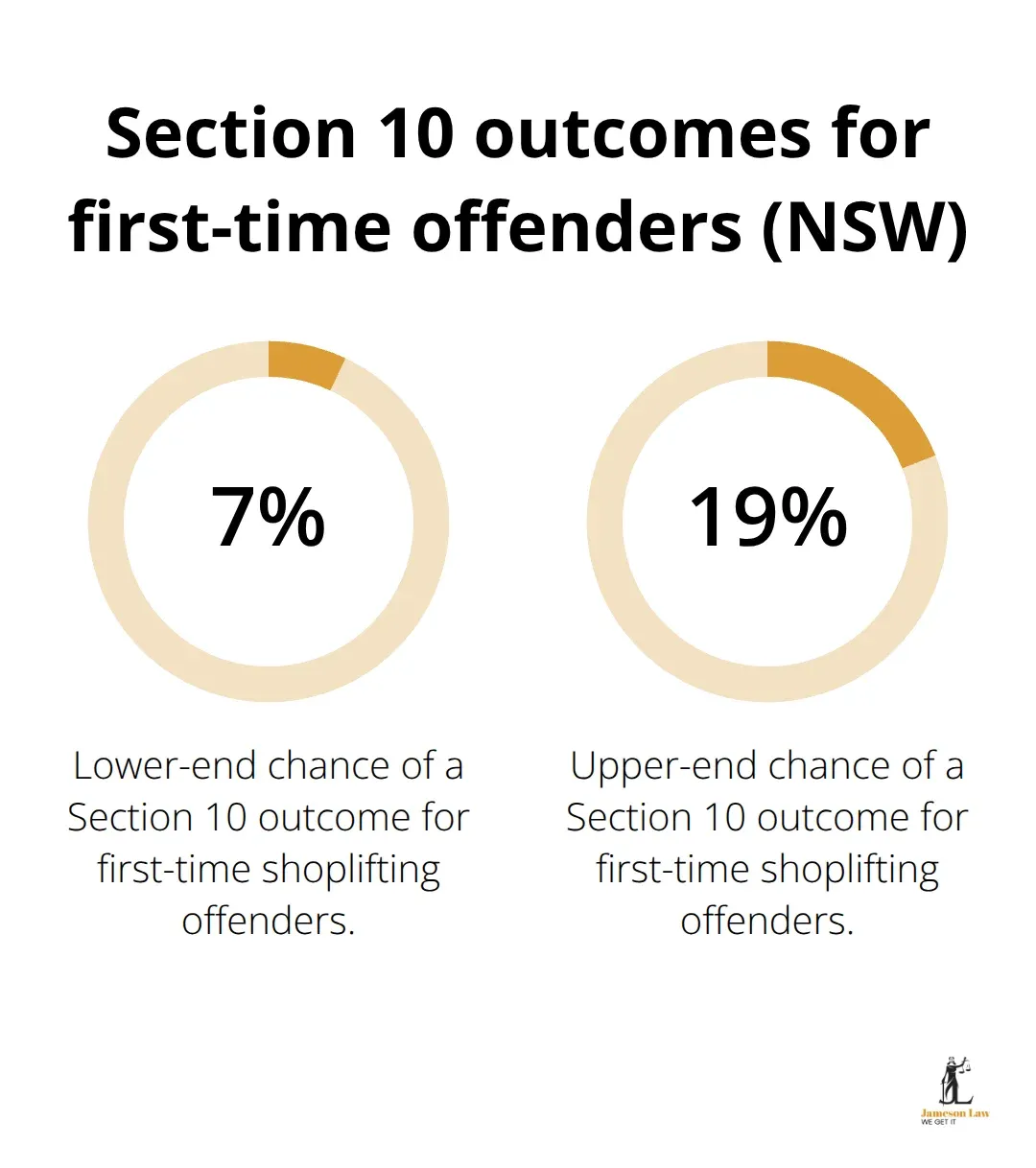
Negotiating with prosecutors before trial often produces the best results for first-time offenders. If you plead guilty, the prosecution may agree to withdraw the charge entirely, reduce the value of goods alleged, or support a Section 10 application that keeps the conviction off your record. Research shows first-time offenders charged with shoplifting have roughly a 7% to 19% chance of a Section 10 outcome depending on the specific theft charge and circumstances, but with proper legal representation and strong mitigation evidence, those odds improve substantially. The key is negotiating within the first 1 to 2 weeks after engaging a lawyer, before the prosecution hardens their position.

Percentage range of Section 10 outcomes for first-time shoplifting offenders in NSW. - Theft charges NSW

Police cautions represent another pathway-these avoid court entirely and leave no conviction recorded, though they require admitting guilt and are only available for minor first offences involving relatively low-value items. If your case qualifies, a caution negotiated through your lawyer can resolve everything within days rather than months. Court diversion programs offer a middle ground where you complete community service, counselling, or education requirements, and upon completion, charges are withdrawn entirely. For items under $500, first-time offenders typically receive good behaviour bonds, community service, or discharge without conviction through these programs.

Evaluating the Prosecution’s Evidence

The prosecution’s evidence matters enormously when you assess your options. Weak CCTV, unreliable witnesses, or procedural failures strengthen your negotiating position and make prosecutors more willing to offer alternatives to conviction. If CCTV clearly shows you taking items, multiple witnesses identify you consistently, and your dishonesty is apparent, trial becomes a gamble with poor odds. Conversely, if the footage is unclear, witness identification wavered, or procedural rules were broken during investigation, trial becomes viable.

Going to Trial

Trial makes sense only when the evidence genuinely supports your defence. The standard remains beyond reasonable doubt, and you need only create reasonable doubt about one element to win acquittal. Many defendants refuse trial because they fear the outcome, but fear differs from evidence analysis. A lawyer who examines the prosecution’s case objectively can tell you whether trial is worth pursuing. Without legal representation, more than 80% of first-time defendants end up convicted, yet with experienced defence counsel mounting a proper challenge, conviction rates drop dramatically for weak cases.

Making Your Decision

The decision between negotiation and trial ultimately depends on evidence strength and your circumstances. A lawyer reviews both objectively and recommends the path most likely to keep you conviction-free.

Final Thoughts

Fighting a shoplifting charge successfully requires you to act within the first 4 to 8 weeks after being charged. The prosecution must prove every element of larceny beyond reasonable doubt, and weaknesses in their evidence create real opportunities for your defence. Whether unclear CCTV footage, unreliable witness identification, or procedural failures during investigation emerge, these gaps can dismantle their case entirely.

Your options extend far beyond pleading guilty or going to trial. You can negotiate with prosecutors, pursue police cautions, or access court diversion programs to resolve your matter without a permanent criminal record. First-time offenders facing theft charges NSW have genuine pathways to avoid conviction, but only if you move quickly and gather evidence before the window closes.

The real cost of inaction is a conviction that stays on your police record permanently and damages employment prospects across retail, finance, healthcare, education, and security sectors. Contact Jameson Law today to discuss your shoplifting charge and review your evidence within days of your first appointment.

Speak to an Expert Lawyer today

Laywers-Jameson-Law-The-best-law-firm-in-Sydney- Sydney Lawyers - Sydney
BOOK NOW

WE'RE IN IT TO WIN IT

Book your consultation

Book Now
Book Now Mobile 06 02 2025

This form submission is encrypted and secured to ensure your information remains confidential.

What our Clients

Related Publications:

What our clients say

.

Jameson Law - Voted the Best Law firm in Sydney Award

Legal Answers ... In Short

We're here to help

Our mission is to ensure our client matters are resolved successfully every time. Success to us does not simply involve winning, but moreover ensuring we take the most feasible, economic and stress-free path to help our clients achieve their goals. We fight hard for our clients, and always go by the motto: we’re in it to win it.

Jameson Law - Best Law Firm in Sydney

WE'RE IN IT TO WIN IT

Book your consultation

Call us now on (02) 8806 0866 or fill out the form below

Book Now Mobile

This form submission is encrypted and secured to ensure your information remains confidential.

WE'RE IN IT TO WIN IT

Book your consultation

Book Now Mobile 06 02 2025
lock

This form submission is encrypted and secured to ensure your information remains confidential.

Our Sydney Offices

Offices Parramatta and Sydney Jameson Law
Parramatta CBD - Head Office
jameson Law - Blacktown
jameson Law - Liverpool Office
Jameson Law - Bankstown
Court Houses We Frequent Jameson Law

Court Houses We Frequent

Balmain Local Court

Registry: Monday to Friday, 9:00am to 4:30pm

Bankstown Local Court

Court Operating Hours: 9:30am-4:30pm

Blacktown Local Court

Registry Hours: 9:00 – 4:30
Telephone Hours: 8:30 -4:30
Days open: Mon-Fri

Burwood Local Court

Registry Hours: 9:00 – 4:30
Telephone Hours: 8:30 – 4:30
Days open: Mon – Fri

Campbell Local Court

Registry Hours: 9:00 – 4:30
Telephone Hours: 8:30 – 4:30
Days open: Mon – Fri

Central Local Court

Registry Hours: 9:00 – 1:00 and 2:00 – 4:30
Telephone Hours: 8:30 – 4:30

Downing Local Court

Registry Hours: 9:00 – 1:00 and 2:00 – 4:30
Telephone Hours: 8:30 – 4:30

Wollongong Local Court

Registry Hours: 9:00 – 1:00 and 2:00 – 4:30
Telephone Hours: 8:30 – 4:30

Fairfield Local Court

Registry Hours: 9:00 – 1:00 and 2:00 – 4:30
Telephone Hours: 8:30 – 4:30

Hornsby Local Court

Registry Hours: 9:00 – 1:00 and 2:00 – 4:30
Telephone Hours: 8:30 – 4:30

Liverpool Local Court

Registry Hours: 9:00 – 1:00 and 2:00 – 4:30
Telephone Hours: 8:30 – 4:30

Manly Local Court

Registry Hours: 9:00 – 1:00 and 2:00 – 4:30
Telephone Hours: 8:30 – 4:30

Newtown Local Court

Registry Hours: 9:00 – 1:00 and 2:00 – 4:30
Telephone Hours: 8:30 – 4:30

Parramatta Local Court

Registry Hours: 9:00 – 1:00 and 2:00 – 4:30
Telephone Hours: 8:30 – 4:30

Penrith Local Court

Registry Hours: 9:00 – 1:00 and 2:00 – 4:30
Telephone Hours: 8:30 – 4:30

Sutherland Local Court

Registry Hours: 9:00 – 1:00 and 2:00 – 4:30
Telephone Hours: 8:30 – 4:30

Waverley Local Court

Registry Hours: 9:00 – 1:00 and 2:00 – 4:30
Telephone Hours: 8:30 – 4:30

Windsor Local Court

Registry Hours: 9:00 – 1:00 and 2:00 – 4:30
Telephone Hours: 8:30 – 4:30

Wollongong Local Court

Registry Hours: 9:00 – 1:00 and 2:00 – 4:30
Telephone Hours: 8:30 – 4:30

Downing Centre District Court

Registry Hours: 9:00 – 4:30
Telephone Hours: 8:30 – 4:30
Days open: Mon – Fri

Parramatta District Court

Registry Hours: 9:00 – 4:30
Days open: Mon-Fri

Penrith District Court

Registry Hours: 9:00 – 4:30
Days open: Mon-Fri

Campbelltown District Court

Registry Hours: 9:00 – 4:30
Days open: Mon – Fri

Liverpool District Court

Registry Hours: 9:00 – 4:30
Days open: Mon – Fri

Wollongong District Court

Registry Hours: 9:00 – 1:00 and 2:00 – 4:30
Telephone Hours: 8:30 – 4:30

Supreme Court New South Wales

Registry Hours: 9:00 AM – 4:30 PM
Telephone Hours: 8:30 AM – 4:30 PM
Days Open: Monday to Friday

Federal Circuit and Family Court of Australia

Registry Hours: 9:00 AM – 4:30 PM
Telephone Hours: 8:30 AM – 5:00 PM
Days Open: Monday to Friday

Federal Court

Monday to Friday, 8:30 AM – 4:30 PM

High Court

Monday to Friday, 8:30 AM – 5:00 PM

Children’s Court of New South Wales

Registry Hours: 9:00 AM – 4:30 PM
Telephone Hours: 8:30 AM – 4:30 PM
Days Open: Monday to Friday

Coroner’s Court New South Wales

Registry Hours: 9:00 AM – 4:30 PM
Telephone Hours: 8:30 AM – 4:30 PM
Days Open: Monday to Friday

Industrial Relations Commission of New South Wales

Registry Hours: 9:00 AM – 4:30 PM
Telephone Hours: 8:30 AM – 4:30 PM
Days Open: Monday to Friday

Land and Environment Court of New South Wales

Registry Hours: 9:00 AM – 4:30 PM
Telephone Hours: 8:30 AM – 4:30 PM
Days Open: Monday to Friday

WE'RE IN IT TO WIN IT

Book your consultation

Book Now
Book Now Mobile 06 02 2025
lock

This form submission is encrypted and secured to ensure your information remains confidential.