PUBLICATION

How Long Does a Workers Compensation Case Take

"Understand how long workers compensation claims take in NSW. Learn key timelines and factors that affect your workplace injury case resolution."
How Long Does a Workers Compensation Case Take

A workplace injury in NSW can leave you uncertain about what comes next. The workers compensation process involves multiple stages, from initial reporting through to potential legal proceedings, and understanding the timeline helps you plan ahead.

At Jameson Law, we’ve guided countless injured workers through this journey. The duration of your case depends on several factors, which we’ll break down in this guide.

Getting Your Claim Started in NSW

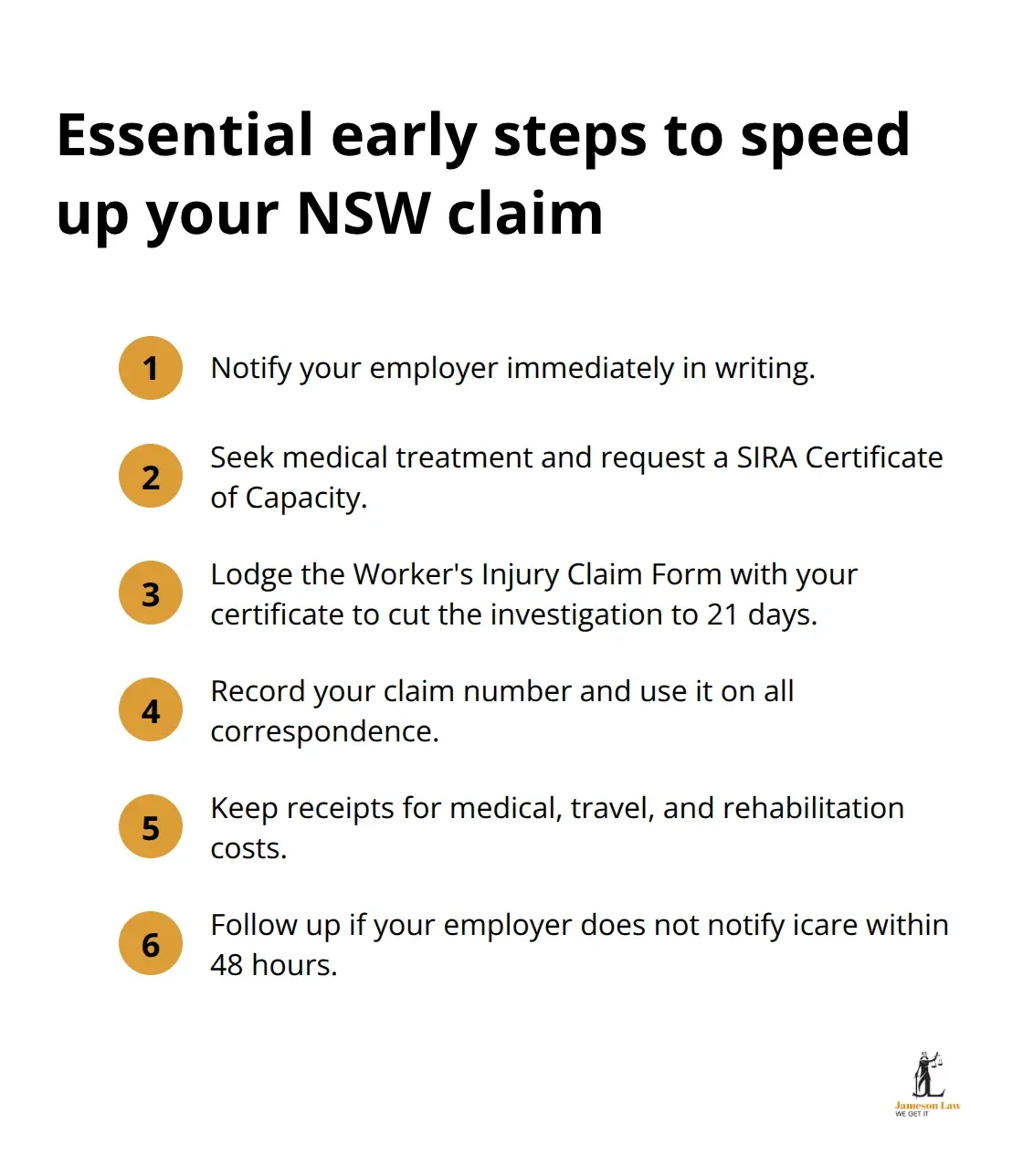
The first hours and days after a workplace injury matter far more than most injured workers realise. In NSW, you have a six-month window to notify your employer of your work-related injury or illness, though waiting that long creates unnecessary complications. SIRA, the State Insurance Regulatory Authority, emphasises that prompt notification protects your rights and accelerates the entire process. Tell your employer as soon as the injury occurs, ideally in writing so you have a record. Your employer then has 48 hours to notify their insurer, icare, which is the main workers compensation insurer for NSW employers. If your employer fails to notify within this timeframe, you can notify icare yourself by contacting them directly.

Checklist of first actions that compress investigation timeframes for NSW workers compensation claims - Workplace injury NSW

This notification triggers the clock on the insurer’s investigation period.

Obtaining Your Medical Documentation

Your doctor plays a critical role in how quickly your claim progresses. After you seek immediate medical treatment, request a SIRA Certificate of Capacity from your nominated treating doctor. This document details your injury, the treatment you need, and your work capacity-whether you can work full duties, modified duties, or not at all. Without this certificate, the insurer cannot properly assess your claim. You choose your own treating doctor rather than having one imposed, which means you can select someone who understands your work environment and injury thoroughly. Keep copies of this certificate and all medical invoices immediately. The insurer usually has 12 weeks to investigate and determine liability, but when you submit your Worker’s Injury Claim Form alongside the Certificate of Capacity, this timeframe compresses to just 21 days. That represents a substantial difference when you’re waiting for weekly payments to begin.

The Verification and Payment Timeline

Once icare receives your notification and documentation, they contact you directly and provide a claim number-record this number for all future correspondence. The insurer will request additional information and medical records to verify your claim. Weekly compensation payments start on your normal payday once the claim is accepted, paid like regular wages. Your employer must maintain your original job or offer an alternative position while you recover, and your entitlements continue even during this period. Medical and reasonable expenses you’ve paid upfront get reimbursed if the claim is accepted, so keep every receipt and invoice. Travel costs for medical appointments and rehabilitation are claimable, particularly for regional workers who can claim meals and accommodation. The speed of this entire phase depends heavily on how promptly you submit documents and how clearly your medical evidence supports your claim. Delays in gathering records or obtaining the Certificate of Capacity can extend the timeline by weeks.

What Happens When Claims Face Obstacles

Not all claims move smoothly through this initial phase. Some insurers request additional medical assessments or clarification on how the injury occurred, which adds time to the verification process. If your employer disputes the claim or questions whether your injury truly arose from work, the timeline shifts dramatically-what might have taken three to four weeks can now stretch into months. The insurer’s 21-day timeframe applies only when you’ve submitted complete documentation; incomplete submissions restart the clock or trigger the full 12-week investigation period instead. Understanding these potential delays helps you prepare for what comes next in the dispute resolution phase.

When Your Claim Gets Disputed

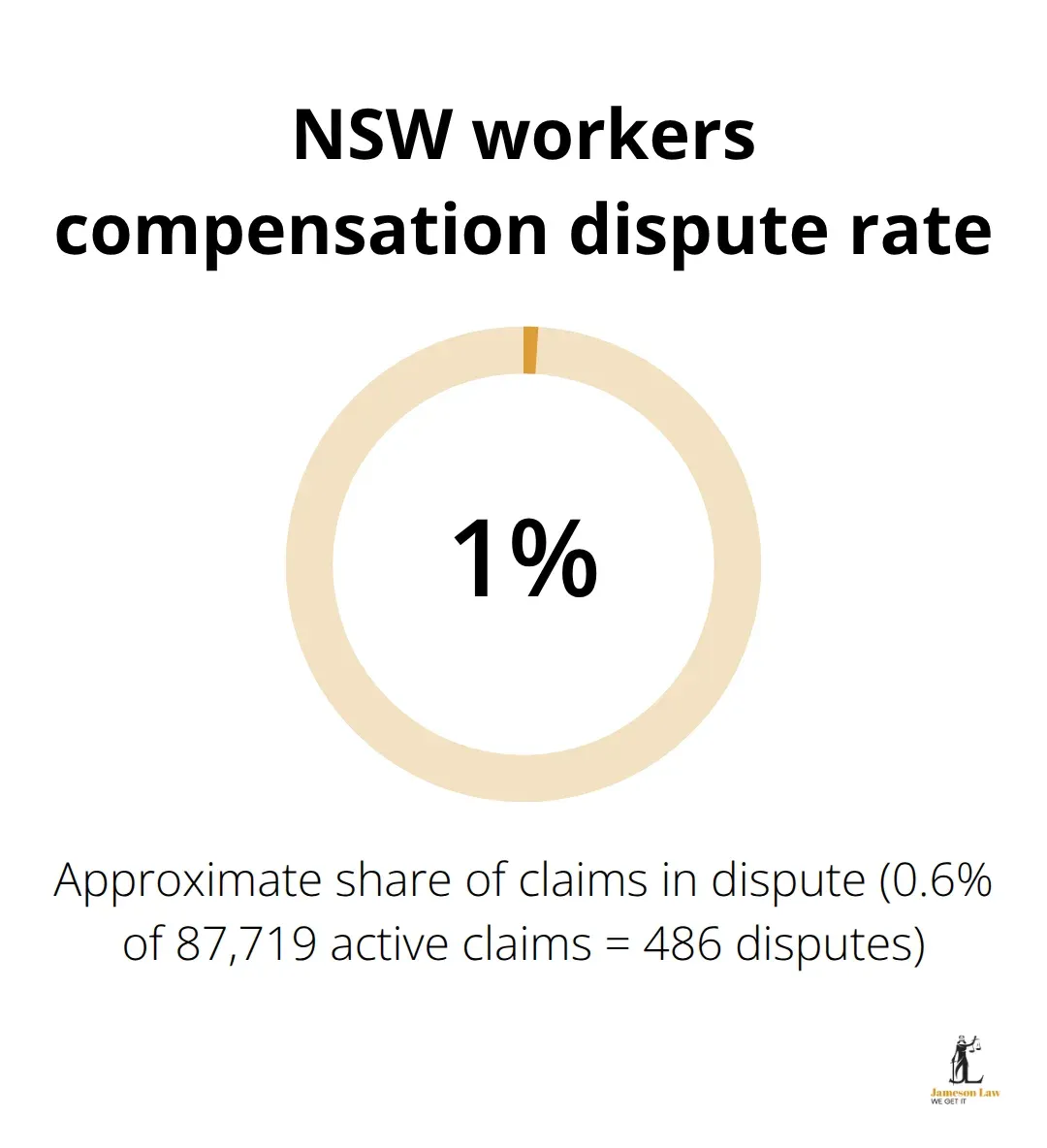
Disputes in NSW workers compensation claims typically arise from one of three core issues: the insurer questions whether your injury genuinely arose from work, they contest the severity of your condition based on their own medical assessments, or they argue that your pre-existing health problems caused the injury rather than your workplace. In January 2019, the dispute rate was 0.6%, with 87,719 active claims and 486 disputes lodged, meaning most injured workers navigate acceptance without major conflict, but a significant minority encounter resistance.

Percentage of NSW workers compensation claims disputed in January 2019 - Workplace injury NSW

Why Insurers Request Additional Medical Evidence

The insurer may request independent medical examinations to verify your injury, which extends your timeline considerably. These assessments take four to eight weeks to schedule and complete, particularly if the examining doctor requires specialist input. If you disagree with their findings, you have the right to obtain your own medical opinion and submit it for consideration. The key to managing this phase is responding promptly to every request from the insurer and providing comprehensive medical evidence from the outset. Delays in submitting additional documents or attending medical appointments give the insurer legitimate reasons to extend their investigation period beyond the standard 21-day window.

Settlement Negotiations and Timelines

Once disputes emerge, two paths typically unfold: negotiation leading to settlement, or formal proceedings before the Workers Compensation Commission. Settlement discussions happen when both you and the insurer reach agreement on liability and compensation amounts, including lump-sum payments for permanent impairment if applicable. These negotiations conclude in weeks or months depending on how far apart your positions sit initially. Your medical evidence, employment records, and clear communication about your work capacity all influence how quickly the insurer moves toward settlement. Providing thorough documentation from the start (medical invoices, treatment records, and wage statements) accelerates these discussions considerably.

Formal Hearings and Commission Decisions

If settlement fails, you enter the formal hearing process before a Commissioner, where evidence is presented, witnesses may testify, and a binding decision is made. The Commission’s timeframe for scheduling hearings varies but typically ranges from three to six months from the date you lodge your dispute application. During this waiting period, weekly compensation payments usually continue if your claim was already accepted, though this depends on the specific circumstances of your dispute. Importantly, if you disagree with the Commissioner’s decision, you can appeal in certain circumstances, which adds further months to resolution. The entire dispute-to-hearing process commonly takes six to twelve months, though complex cases involving permanent impairment assessments extend beyond this timeframe.

Building Your Case With Professional Support

Throughout these proceedings, you maintain detailed records of all medical appointments, treatment costs, and communications with the insurer-these documents form the foundation of your case. If your case involves serious disputes about liability or substantial compensation amounts, seeking independent legal advice early in the process protects your interests and often accelerates settlement discussions (insurers recognise you have professional representation and adjust their approach accordingly). A lawyer experienced in NSW workers compensation can identify weaknesses in the insurer’s position, gather supporting medical evidence, and present your case effectively before the Commission. The complexity of your injury, the insurer’s willingness to negotiate, and the strength of your medical evidence all determine whether your dispute resolves quickly or extends into formal proceedings.

What Slows Down Your Workers Compensation Claim

How Injury Severity Affects Your Timeline

The severity of your injury determines how many medical assessments you’ll face and how long those assessments take. A straightforward soft tissue injury with clear imaging and consistent medical opinions resolves far faster than a complex spinal injury requiring multiple specialist consultations, neurological testing, or ongoing diagnostic imaging.

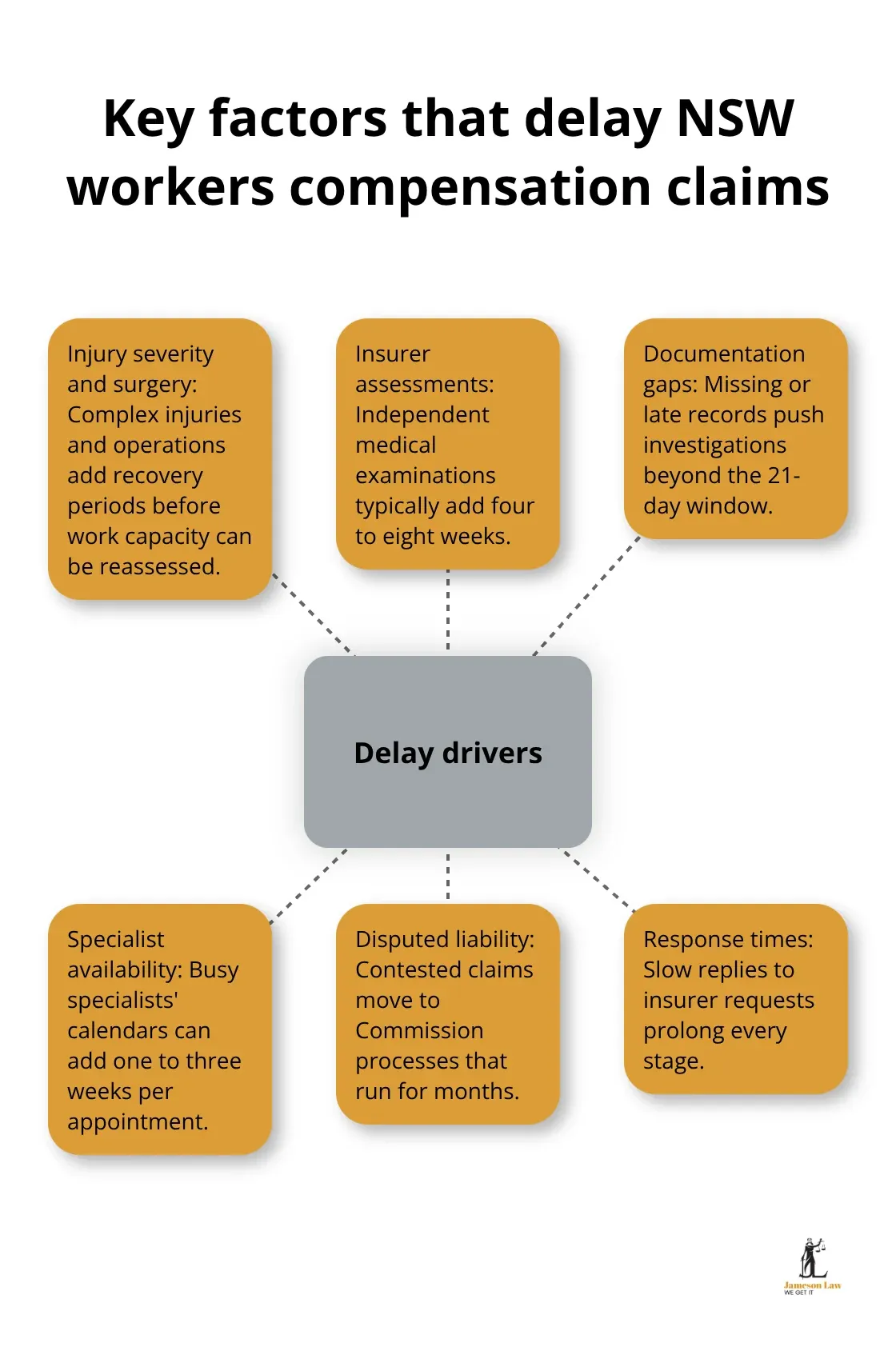
Hub-and-spoke diagram showing main drivers of delay in NSW workers compensation timelines

Injury severity affects your timeline in ways that extend beyond initial diagnosis. If your injury requires surgery, you’ll wait for the procedure itself, then post-operative recovery periods before your treating doctor can accurately assess your work capacity. Each additional medical appointment, imaging study, or specialist referral adds one to three weeks to your timeline.

The insurer will also request their own medical assessment if they question your diagnosis or prognosis, which introduces another four to eight weeks of waiting. You cannot control how quickly specialists’ calendars fill, but you can control how promptly you respond to the insurer’s requests and how thoroughly you document your medical treatment from day one. Incomplete or delayed medical records give insurers legitimate reasons to extend their investigation, turning what might be a three-week claim into a three-month claim.

Medical Evidence and Documentation Quality

The quality of your initial medical documentation shapes how quickly the insurer moves forward. Medical evidence and documentation quality directly influences the insurer’s assessment process. Your treating doctor provides comprehensive detail about your condition, treatment plan, and functional limitations, and the insurer faces less reason to request independent assessments.

Evidentiary documentation problems frequently cause rejections that could have been prevented with thorough initial records. Respond to every request from the insurer without delay and provide thorough medical records from the outset. This approach accelerates the entire process considerably. Your employer’s incident report also matters significantly-a detailed, accurate report that corroborates your medical evidence strengthens your position and reduces the likelihood of disputes that would extend your timeline.

Contested Claims Versus Accepted Claims

Whether your claim is accepted or contested fundamentally reshapes your entire timeline. Accepted claims move through payment and treatment phases with minimal disruption, whilst contested claims versus accepted claims trigger the formal dispute process. An insurer contests your claim when they believe your injury didn’t genuinely arise from work, when they dispute the severity based on their own medical evidence, or when they argue pre-existing conditions caused your injury.

The critical factor here is the quality of your initial medical documentation and your employer’s injury report. If your medical documentation clearly links your injury to your workplace duties and your employer’s incident report corroborates your account, the insurer faces an uphill battle in contesting liability. The moment a claim moves into dispute, you’re no longer working within standard assessment windows; you’re now operating under the formal Commission process with hearing dates scheduled months ahead.

Early Legal Advice and Dispute Prevention

Securing independent legal advice before disputes escalate often prevents this extended timeline entirely. Experienced lawyers identify weaknesses in the insurer’s position early and negotiate settlements that avoid formal proceedings altogether. When insurers recognise you have professional representation, they adjust their approach and move more quickly toward resolution. The complexity of your injury, the insurer’s willingness to negotiate, and the strength of your medical evidence all determine whether your dispute resolves quickly or extends into formal proceedings.

Final Thoughts

A workplace injury in NSW typically moves through several phases: initial notification and claim processing within three to four weeks, potential dispute resolution spanning three to twelve months if contested, and final settlement or Commission decision. The actual duration depends entirely on how quickly you act and how thoroughly you document everything from day one. Your first priority after any workplace injury is notifying your employer immediately and obtaining a SIRA Certificate of Capacity from your treating doctor-these two steps compress the insurer’s investigation timeframe from twelve weeks to just twenty-one days.

Every day you delay gathering medical records or responding to the insurer’s requests extends your timeline unnecessarily. Keep copies of all medical invoices, treatment records, incident reports, and correspondence with your employer and the insurer, as this documentation becomes your foundation if disputes arise and determines how quickly settlement negotiations progress. The difference between a claim that resolves in weeks versus one that stretches into months often comes down to the quality of your initial evidence and your responsiveness to requests.

When disputes emerge, seeking independent legal advice early often prevents the extended timeline of formal proceedings altogether. Experienced lawyers identify weaknesses in the insurer’s position and negotiate settlements that resolve your case faster. If you’re facing a contested claim or uncertainty about your next steps, contact Jameson Law for guidance tailored to your specific circumstances.

Speak to an Expert Lawyer today

Laywers-Jameson-Law-The-best-law-firm-in-Sydney- Sydney Lawyers - Sydney
BOOK NOW

WE'RE IN IT TO WIN IT

Book your consultation

Book Now
Book Now Mobile 06 02 2025

This form submission is encrypted and secured to ensure your information remains confidential.

What our Clients

Related Publications:

What our clients say

.

Jameson Law - Voted the Best Law firm in Sydney Award

Legal Answers ... In Short

We're here to help

Our mission is to ensure our client matters are resolved successfully every time. Success to us does not simply involve winning, but moreover ensuring we take the most feasible, economic and stress-free path to help our clients achieve their goals. We fight hard for our clients, and always go by the motto: we’re in it to win it.

Jameson Law - Best Law Firm in Sydney

WE'RE IN IT TO WIN IT

Book your consultation

Call us now on (02) 8806 0866 or fill out the form below

Book Now Mobile

This form submission is encrypted and secured to ensure your information remains confidential.

WE'RE IN IT TO WIN IT

Book your consultation

Book Now Mobile 06 02 2025
lock

This form submission is encrypted and secured to ensure your information remains confidential.

Our Sydney Offices

Offices Parramatta and Sydney Jameson Law
Parramatta CBD - Head Office
jameson Law - Blacktown
jameson Law - Liverpool Office
Jameson Law - Bankstown
Court Houses We Frequent Jameson Law

Court Houses We Frequent

Balmain Local Court

Registry: Monday to Friday, 9:00am to 4:30pm

Bankstown Local Court

Court Operating Hours: 9:30am-4:30pm

Blacktown Local Court

Registry Hours: 9:00 – 4:30
Telephone Hours: 8:30 -4:30
Days open: Mon-Fri

Burwood Local Court

Registry Hours: 9:00 – 4:30
Telephone Hours: 8:30 – 4:30
Days open: Mon – Fri

Campbell Local Court

Registry Hours: 9:00 – 4:30
Telephone Hours: 8:30 – 4:30
Days open: Mon – Fri

Central Local Court

Registry Hours: 9:00 – 1:00 and 2:00 – 4:30
Telephone Hours: 8:30 – 4:30

Downing Local Court

Registry Hours: 9:00 – 1:00 and 2:00 – 4:30
Telephone Hours: 8:30 – 4:30

Wollongong Local Court

Registry Hours: 9:00 – 1:00 and 2:00 – 4:30
Telephone Hours: 8:30 – 4:30

Fairfield Local Court

Registry Hours: 9:00 – 1:00 and 2:00 – 4:30
Telephone Hours: 8:30 – 4:30

Hornsby Local Court

Registry Hours: 9:00 – 1:00 and 2:00 – 4:30
Telephone Hours: 8:30 – 4:30

Liverpool Local Court

Registry Hours: 9:00 – 1:00 and 2:00 – 4:30
Telephone Hours: 8:30 – 4:30

Manly Local Court

Registry Hours: 9:00 – 1:00 and 2:00 – 4:30
Telephone Hours: 8:30 – 4:30

Newtown Local Court

Registry Hours: 9:00 – 1:00 and 2:00 – 4:30
Telephone Hours: 8:30 – 4:30

Parramatta Local Court

Registry Hours: 9:00 – 1:00 and 2:00 – 4:30
Telephone Hours: 8:30 – 4:30

Penrith Local Court

Registry Hours: 9:00 – 1:00 and 2:00 – 4:30
Telephone Hours: 8:30 – 4:30

Sutherland Local Court

Registry Hours: 9:00 – 1:00 and 2:00 – 4:30
Telephone Hours: 8:30 – 4:30

Waverley Local Court

Registry Hours: 9:00 – 1:00 and 2:00 – 4:30
Telephone Hours: 8:30 – 4:30

Windsor Local Court

Registry Hours: 9:00 – 1:00 and 2:00 – 4:30
Telephone Hours: 8:30 – 4:30

Wollongong Local Court

Registry Hours: 9:00 – 1:00 and 2:00 – 4:30
Telephone Hours: 8:30 – 4:30

Downing Centre District Court

Registry Hours: 9:00 – 4:30
Telephone Hours: 8:30 – 4:30
Days open: Mon – Fri

Parramatta District Court

Registry Hours: 9:00 – 4:30
Days open: Mon-Fri

Penrith District Court

Registry Hours: 9:00 – 4:30
Days open: Mon-Fri

Campbelltown District Court

Registry Hours: 9:00 – 4:30
Days open: Mon – Fri

Liverpool District Court

Registry Hours: 9:00 – 4:30
Days open: Mon – Fri

Wollongong District Court

Registry Hours: 9:00 – 1:00 and 2:00 – 4:30
Telephone Hours: 8:30 – 4:30

Supreme Court New South Wales

Registry Hours: 9:00 AM – 4:30 PM
Telephone Hours: 8:30 AM – 4:30 PM
Days Open: Monday to Friday

Federal Circuit and Family Court of Australia

Registry Hours: 9:00 AM – 4:30 PM
Telephone Hours: 8:30 AM – 5:00 PM
Days Open: Monday to Friday

Federal Court

Monday to Friday, 8:30 AM – 4:30 PM

High Court

Monday to Friday, 8:30 AM – 5:00 PM

Children’s Court of New South Wales

Registry Hours: 9:00 AM – 4:30 PM
Telephone Hours: 8:30 AM – 4:30 PM
Days Open: Monday to Friday

Coroner’s Court New South Wales

Registry Hours: 9:00 AM – 4:30 PM
Telephone Hours: 8:30 AM – 4:30 PM
Days Open: Monday to Friday

Industrial Relations Commission of New South Wales

Registry Hours: 9:00 AM – 4:30 PM
Telephone Hours: 8:30 AM – 4:30 PM
Days Open: Monday to Friday

Land and Environment Court of New South Wales

Registry Hours: 9:00 AM – 4:30 PM
Telephone Hours: 8:30 AM – 4:30 PM
Days Open: Monday to Friday

WE'RE IN IT TO WIN IT

Book your consultation

Book Now
Book Now Mobile 06 02 2025
lock

This form submission is encrypted and secured to ensure your information remains confidential.