

Mental health injuries sustained in the workplace are complex, and securing your entitlements requires a thorough understanding of the legislative framework. A well-prepared psychological injury claim NSW can provide essential weekly income support, cover medical treatments, and assist your long-term rehabilitation.
At Jameson Law, we assist employees in navigating the NSW workers compensation scheme. This guide outlines the formal requirements for establishing a claim, the critical 1 July 2026 legislative updates, and the structured benefits available to injured workers.
What Counts as a Primary Psychological Injury at Work?
For claims notified on or after 1 July 2026, a primary psychological injury must arise from a statutory relevant event, have a real and direct connection with employment, and employment must be the main contributing factor. The current requirements are explained in SIRA’s psychological injury guidance for workers and employers.
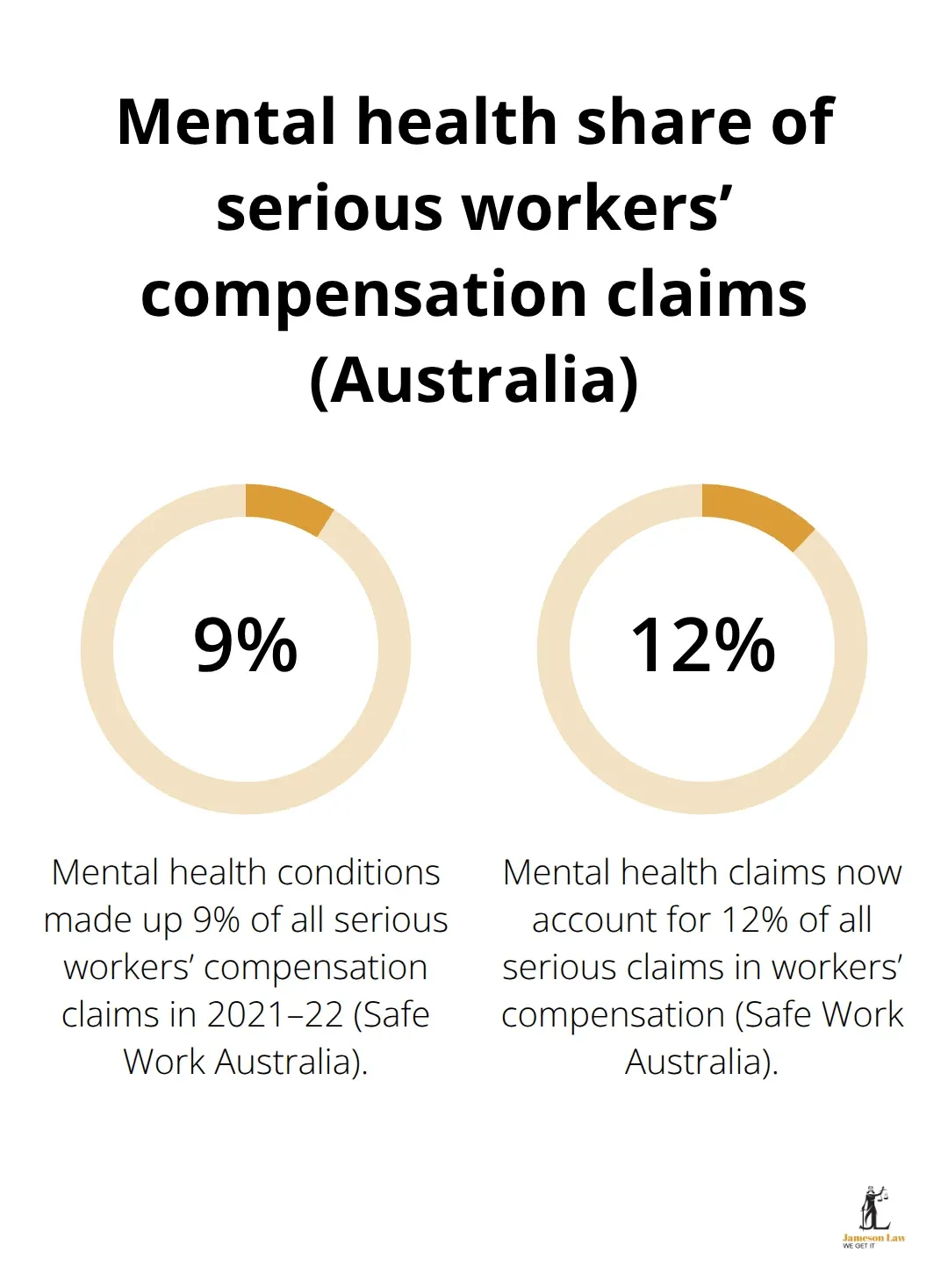
The State Insurance Regulatory Authority (SIRA) distinguishes between two types of events:
- Relevant Conduct Claims: These involve workplace dynamics such as bullying, sexual harassment, racial harassment, or excessive work demands.
- Other Relevant Events: These include experiencing violence or threats, serious criminal conduct, witnessing trauma, the death of a person in the worker’s care (subject to statutory requirements), or vicarious trauma.
The Role of Medical Evidence
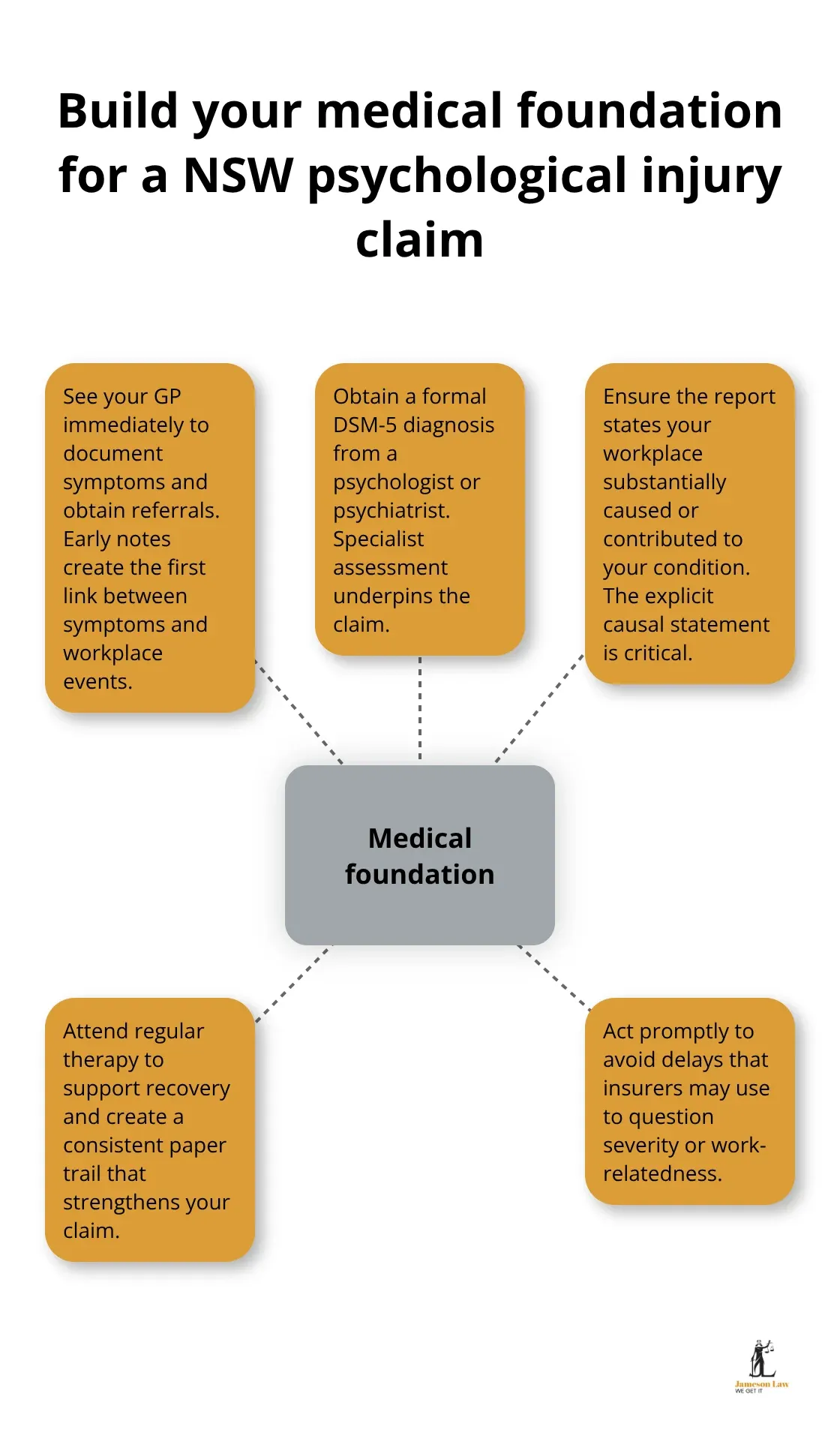
You need medical evidence identifying a mental or psychiatric disorder. A medical practitioner—commonly the nominated treating doctor or GP—can diagnose the condition and issue a SIRA Certificate of Capacity, which is generally required when claiming weekly payments. Specialist psychological or psychiatric evidence may assist a disputed claim, but it is not invariably required to begin the claim process. Learn more in our guide to claiming mental injury compensation.
The Section 11A Defence: Reasonable Management Action
A significant barrier is Section 11A of the Workers Compensation Act 1987. Under the post-1 July 2026 rules, a primary psychological injury is not compensable where its predominant significant cause was reasonable management action, the expectation of that action, or the worker’s perception of it.
Reasonable management action may include performance appraisals, disciplinary action, transfers, demotions, promotions, investigations, retrenchment or dismissal when the action and the way it is carried out are reasonable in all the circumstances. If the action is not reasonable, the claim must still satisfy every other statutory requirement. See our guide to psychological injury claims.
Navigating Claim Timelines and Interim Payments
Prompt notification is important. Once notified, the employer must notify its workers compensation insurer within 48 hours, as outlined in SIRA’s guidance for insurers.
The 2026 reforms establish distinct timelines and interim payment structures depending on the nature of the relevant event causing your injury:
| Claim Type | Initial Processing & Interim Payments | Formal Determination Period |
|---|---|---|
| Relevant Conduct Claims (e.g., Bullying, Excessive Demands) |
Requires a completed claim form and minimum information. Interim payments start no later than 7 days at 75% of PIAWE (less current earnings), plus up to $7,500 in eligible treatment. | Generally determined within 42 days. |
| Other Relevant Events (e.g., Witnessing Trauma, Violence) |
Provisional liability may start within 7 days. | If a completed claim form follows a reasonable excuse, liability is determined within 21 days. |
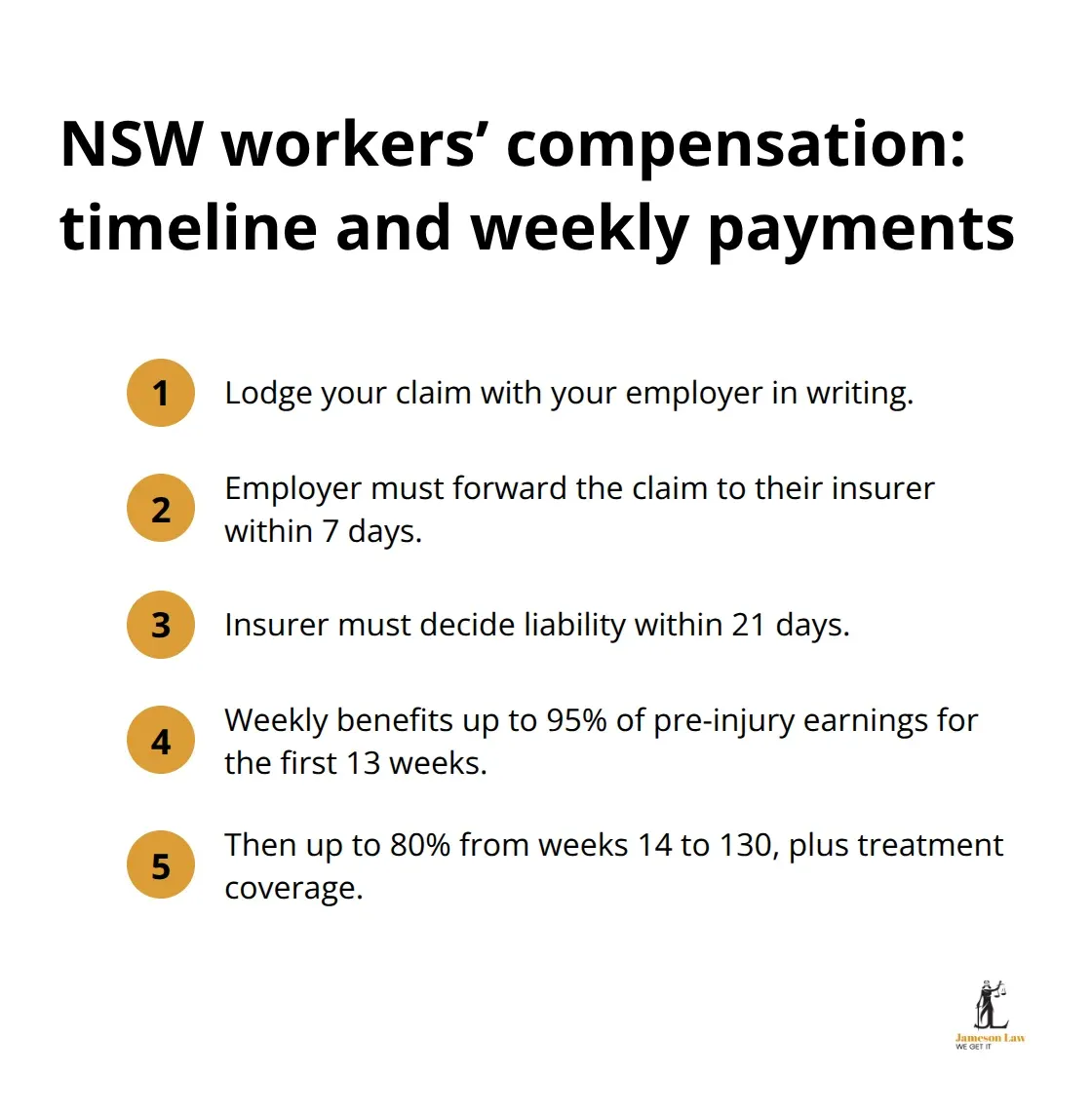
Once liability is formally accepted, ordinary weekly payments may be paid at up to 95% of your Pre-Injury Average Weekly Earnings (PIAWE). If you were receiving the 75% interim payment, the insurer must back-pay the difference no later than 21 days after acceptance.
Long-Term Compensation and WPI Thresholds
For primary psychological injuries notified or claimed on or after 1 July 2026, weekly-payment duration and medical-treatment access depend on statutory time limits, WPI thresholds and other eligibility requirements. SIRA’s weekly payments guidance explains the current framework.
- 130-Week Cutoff: Most primary psychological injury weekly payments cease entirely after 130 weeks.
- 15% WPI: This remains the threshold for lump-sum permanent impairment compensation for a primary psychological injury.
- At least 21% WPI: May permit a further 52 weeks of weekly payments beyond the initial 130 weeks in specified circumstances.
- At least 25% WPI: Is the 2026 upper threshold for potential weekly payments to retiring age, subject to section 38 and other requirements, and may permit a work injury damages claim where the remaining criteria are met.
- More than 30% WPI: Classifies the worker as having highest-needs, providing extended access to medical and related treatment.
Frequently Asked Questions
What qualifies as a primary psychological injury for workers compensation in NSW?
For claims notified on or after 1 July 2026, a primary psychological injury must arise from a statutory relevant event, have a real and direct employment connection, and your employment must be the main contributing factor to the injury.
What is the Section 11A reasonable management action defence?
Under Section 11A of the Workers Compensation Act 1987, a primary psychological injury is not compensable if its predominant significant cause was reasonable management action (such as performance appraisals, disciplinary action, or retrenchment), its expectation, or its perception.
What is the WPI threshold for a psychological injury lump sum payout in NSW?
To claim a lump sum payout for permanent impairment resulting from a primary psychological injury, you must be formally assessed as having at least a 15% Whole Person Impairment (WPI). Other thresholds apply for ongoing weekly payments and medical treatment.
This article provides general information only. The applicable rules depend on the notification date, claim type and individual circumstances; obtain advice for your situation.
Final Thoughts
Pursuing a psychological injury claim NSW involves navigating complex statutory requirements, strict medical thresholds, and nuanced insurer timelines. Ensuring your claim form is complete, acquiring a SIRA Certificate of Capacity from your treating doctor, and effectively responding to potential Section 11A disputes are foundational steps toward protecting your rights.
If you require professional guidance regarding a workplace mental health claim, the team at Jameson Law can provide measured, comprehensive advice tailored to your circumstances. We can help you understand your options, communicate with insurers, and ensure your claim aligns with current NSW workers compensation legislation.