


If you have been injured in NSW, you are racing against the clock. Personal injury time limits are legislatively strict, and missing them can permanently cost you your right to claim compensation.
At Jameson Law, we have seen too many people lose perfectly valid claims because they waited too long or relied on widespread myths about legal deadlines. This authoritative guide breaks down exactly how much time you have, the rare exceptions that exist, and the devastating consequences of missing your statutory window.
How Much Time Do You Have to Claim?
The 3-Year Discoverability Rule
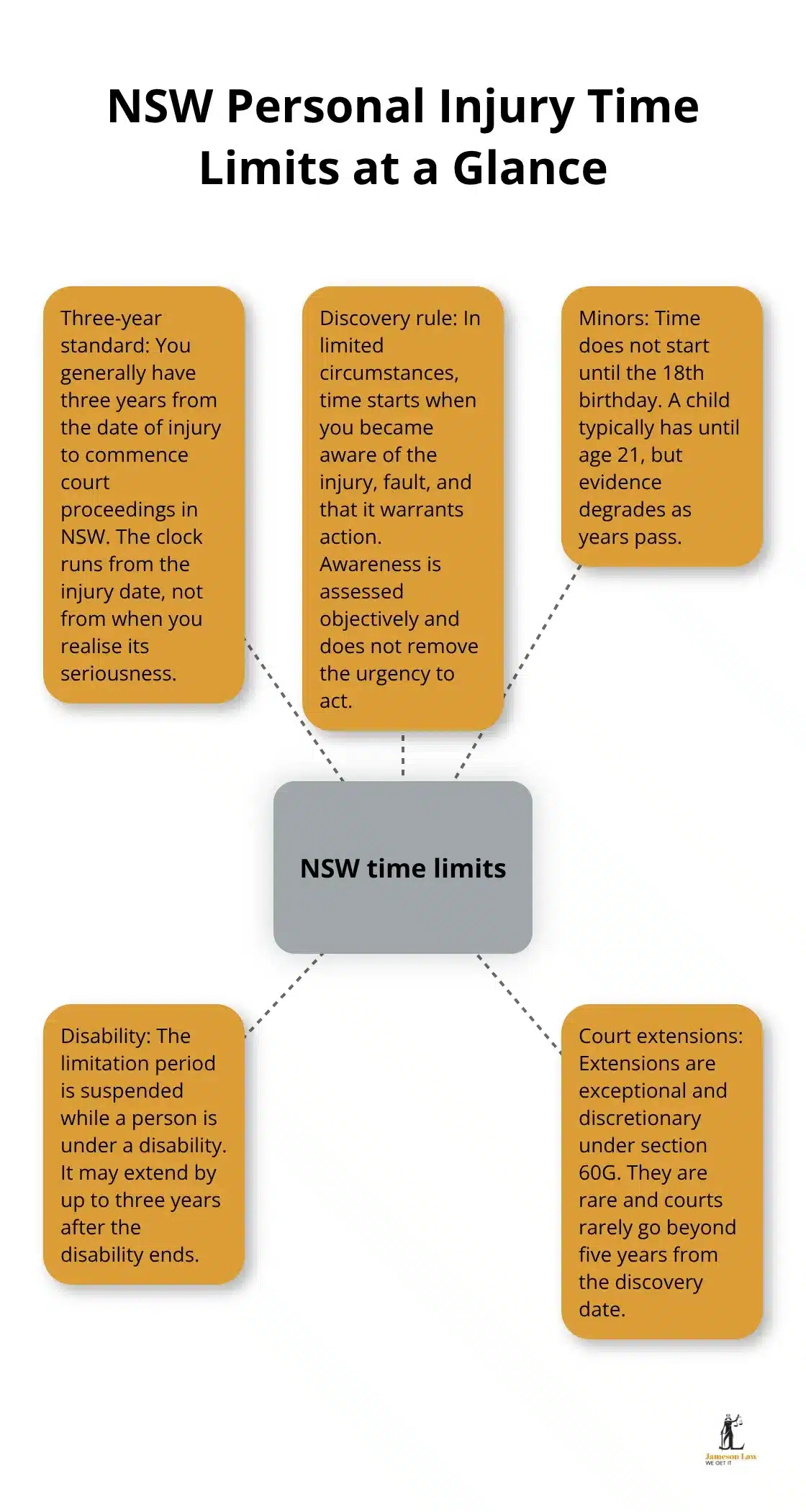
Under NSW law, the Limitation Act 1969 (NSW) sets unforgiving deadlines for civil litigation. The standard rule dictates that you have three years from the date of discoverability to commence formal court proceedings. This window applies broadly to public liability events, slips and falls, and medical negligence.
The “date of discoverability” is not a flexible concept. The three-year clock starts the moment you knew (or objectively should have known) three specific facts:
- The injury had occurred.
- The injury was caused by the fault or negligence of another party.
- The injury was sufficiently serious to justify legal action.
Courts interpret “should have known” objectively. If a reasonable person would have investigated the cause of their back pain months earlier, the court starts the clock from that earlier date—not the date you finally decided to see a specialist.
The 12-Year Long-Stop Limit
Alongside the 3-year rule, NSW enforces an absolute “long-stop” limitation period of 12 years from the time of the act or omission that caused the injury. Even if you only discovered your injury 13 years after an accident, the 12-year long-stop rule legally bars your claim entirely, acting as a definitive cut-off point.
| Claim Type | Initial Notification Deadline | Final Legal Time Limit |
|---|---|---|
| Motor Vehicle (CTP) | Report to Police: 28 Days. Lodge Claim: 3 Months. |
3 Years to commence court proceedings. |
| Workers’ Compensation | Notify employer immediately. Lodge form within 6 months. |
3 Years for Common Law damages. |
| Public Liability | Immediate incident report to the occupier highly recommended. | 3 Years from discoverability. |
When Time Limits Bend (and When They Don’t)
The Dangerous Myth About Minors
A widespread and dangerous legal myth is that if a child is injured, the limitation clock completely stops until their 18th birthday. This is false in most cases. Under Section 50F of the Limitation Act 1969, the limitation period is not suspended if the minor has a capable parent or guardian who could pursue the claim on their behalf.
Parents often delay taking action, mistakenly believing they have until the child turns 21. By that time, vital evidence is destroyed, witnesses have disappeared, and the claim is struck out. Exceptions only apply if the minor was injured by a close relative or guardian.
Critical Exception (Child Abuse): Following significant legislative reforms, there is now no limitation period for victims pursuing civil compensation for child abuse.
Court Extensions: A Narrow and Risky Path
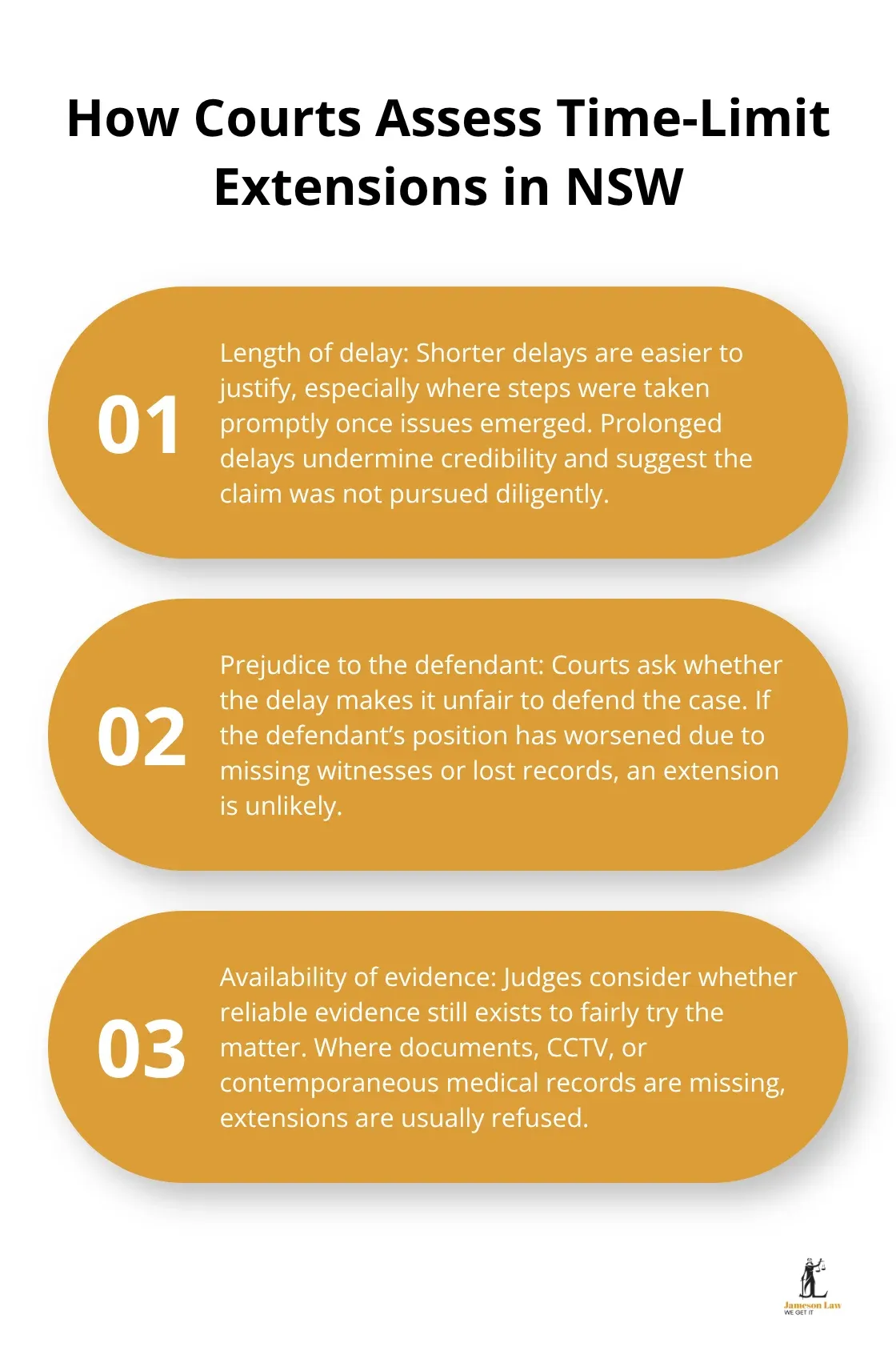
Courts extend deadlines only in highly exceptional circumstances. Under Section 60G of the Act, you must prove to a judge that granting an extension is “just and reasonable”. This threshold is incredibly difficult to satisfy.
Judges heavily scrutinise the length of your delay and, crucially, whether the defendant’s ability to mount a fair defence has been prejudiced (e.g., deleted CCTV footage, untraceable staff). In practice, if you miss the deadline, your chances of recovering anything drop dramatically.
What Happens When You Miss the Deadline?
The Finality of Expired Time Limits
Once the three-year window closes, your right to sue vanishes almost entirely. NSW courts will reject your claim at the registry level, and corporate insurers will immediately file motions to strike your case out with costs. This is not a mere technicality; it is an absolute statutory barrier. A legitimate claim worth hundreds of thousands of dollars disappears simply because you filed on day 1,096 instead of day 1,095.
Immediate Actions That Protect Your Claim
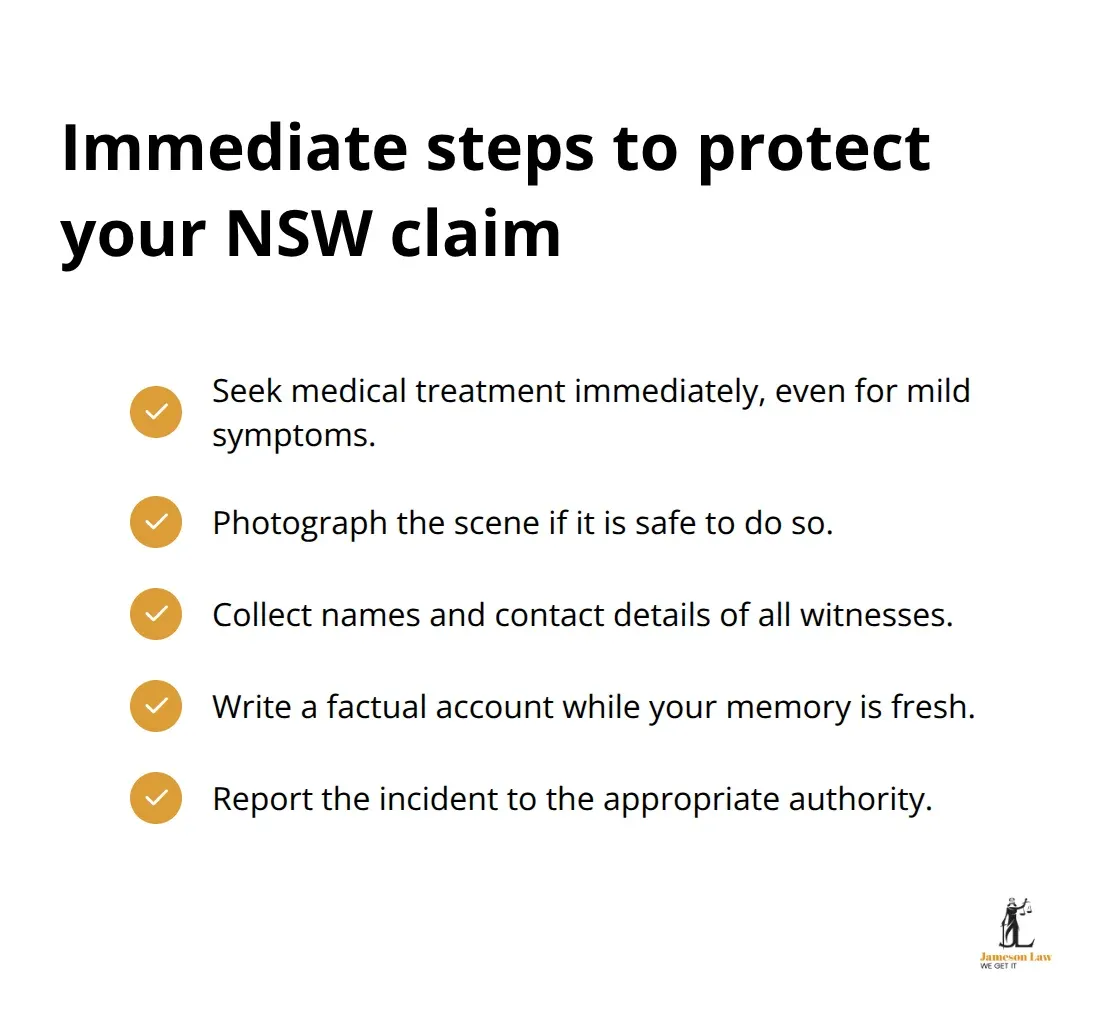
The meticulous steps you take in the first weeks determine whether your claim survives. To structurally safeguard your case:
- Seek Medical Treatment Immediately: Clinical records created near the incident date act as objective evidence of causation and firmly establish your date of discoverability.
- Preserve the Scene: Photograph the hazard, vehicle damage, or injury site before it is repaired.
- Lodge Formal Reports: Report to the police, your employer, or the property manager to lock the defendant into an official version of events.
Final Thoughts
Personal injury time limits operate as absolute legal barriers designed to destroy delayed claims. The standard three-year window from the date of discoverability—capped firmly by the 12-year long-stop rule—means you cannot afford to wait. Acting immediately by seeking treatment and preserving evidence is far more effective than relying on a highly improbable court extension.
Do not fall victim to dangerous myths, especially regarding minors. The evidence you collect in the first 30 days is exponentially more valuable than evidence chased down three years later when witnesses have moved on and corporate records have been purged.
Contact an expert lawyer early to identify exactly which statutory limits apply to your specific injury. At Jameson Law, we aggressively manage these procedural deadlines to protect your rights, operating on a transparent No Win, No Fee basis. Secure your future and your compensation before the clock runs out—act now.