

Personal Injury Compensation NSW: Your Complete Guide
A personal injury can happen in seconds, but the path to fair compensation often feels complicated. At Jameson Law, our highly experienced legal team has helped countless NSW residents understand their rights and recover what they are legally entitled to.
This guide walks you through what counts as a personal injury compensation NSW claim, what damages you can pursue, and the practical steps you need to take right now to protect your future.
What Counts as a Personal Injury Claim in NSW
The Foundation: Negligence and Duty of Care
Under NSW law, a personal injury claim exists when someone suffers physical or psychological harm because another person or organisation failed in their duty of care toward them. This failure is known as negligence, meaning a failure to exercise reasonable care and skill. It forms the foundation of most compensation claims in NSW.
The injury itself must be real and documented—not merely speculative or minor. NSW courts recognise injuries from motor vehicle accidents, workplace incidents, slip-and-fall accidents, medical malpractice, and institutional abuse. What matters is that someone else’s carelessness or breach of duty directly caused your harm.
Types of Injuries and Recoverable Losses
The types of injuries covered are broad, provided they meet the requisite threshold of seriousness. Medical expenses, lost wages, ongoing treatment costs, pain and suffering, and future care needs are all recoverable if your claim succeeds.
NSW operates distinct compensation schemes depending on how you were injured. Each scheme administers different operational rules and caps:
- Workers’ Compensation: For workplace and employment-related injuries.
- Motor Accident Injuries Scheme: For vehicle, motorcycle, and pedestrian collisions.
- Civil Liability Claims: For other negligent acts, including slip-and-fall incidents and public liability.
| Compensation Scheme | Economic Loss (Weekly Caps) | Non-Economic Loss (Pain & Suffering) |
|---|---|---|
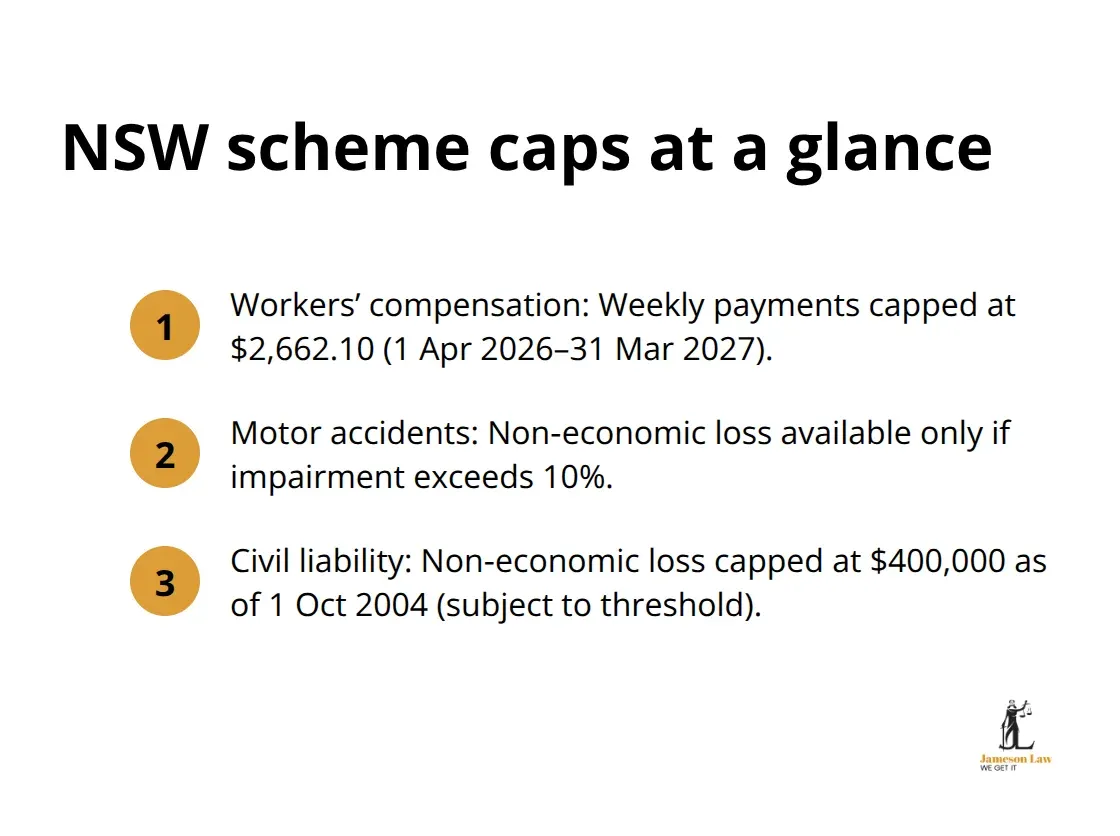
| Workers’ Compensation | Up to 95% of PIAWE initially (Capped at $2,662.10/wk as of April 2026). | Lump sum based on Whole Person Impairment (WPI) percentage. |
| Motor Accidents (CTP) | Maximum net weekly earnings capped at $6,334. | Capped at $691,000 (Requires >10% impairment threshold). |
| Civil Liability | Capped at 3x the NSW average weekly earnings. | Capped at $804,000 (Requires at least 15% severity threshold). |
What You Can Actually Claim
Workers’ Compensation Entitlements
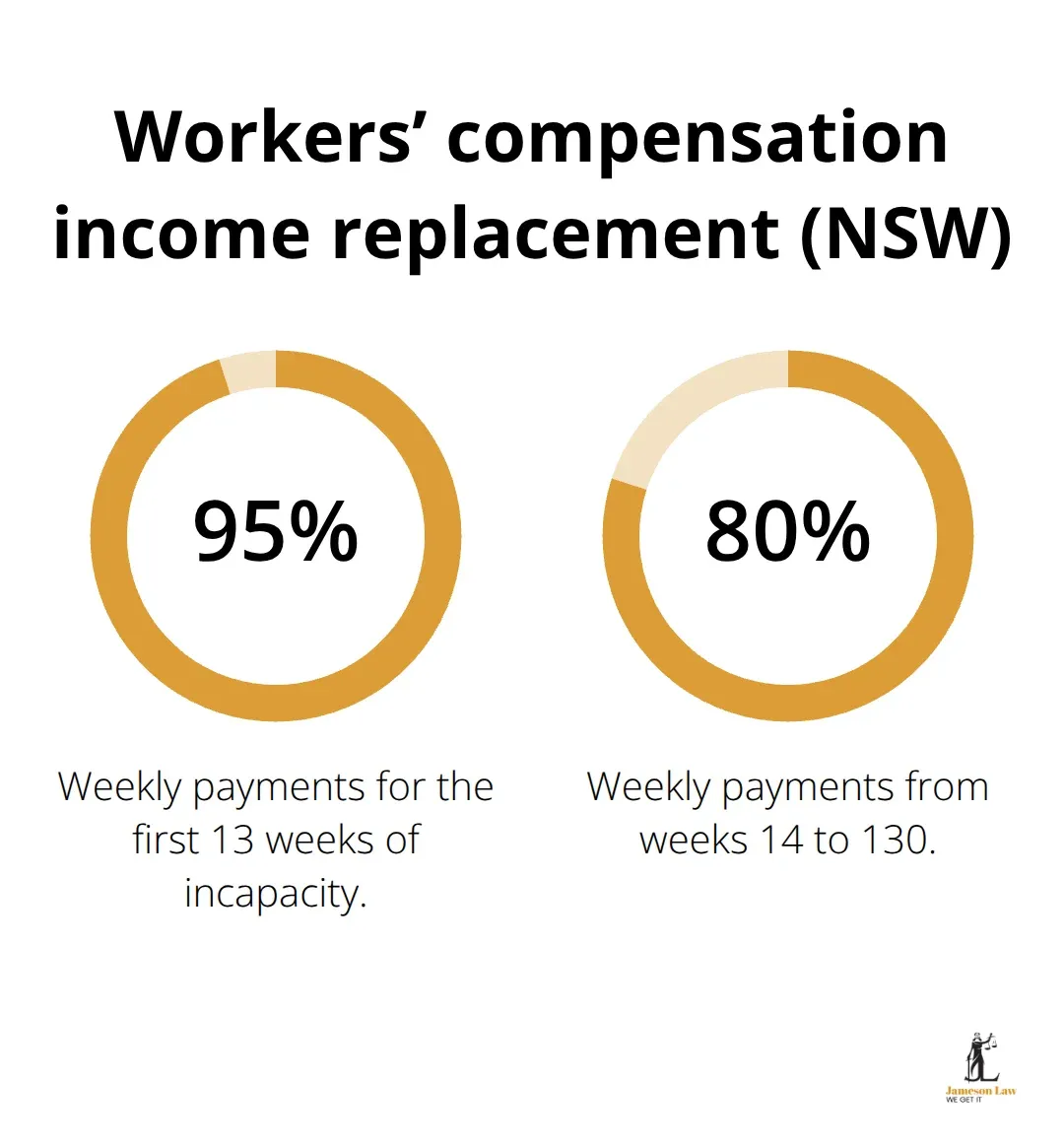
Under NSW workers’ compensation law, you can recover weekly payments up to 95% of your pre-injury earnings for the first 13 weeks, then up to 80% from weeks 14 to 130 (with a statutory maximum weekly payment of $2,662.10 from 1 April 2026). Medical and rehabilitation expenses are paid directly to approved providers, allowing you to avoid out-of-pocket costs.
Permanent impairment lump sums are calculated using the NSW statutory impairment guidelines once your condition stabilises. Many injured workers inadvertently underestimate their entitlement by accepting initial insurer offers without challenging low clinical assessments, which can cost them thousands in lost compensation.
Motor Accident and Civil Liability Compensation
Motor accident claims operate under different legislative rules than workplace injuries. Non-economic loss caps are heavily regulated. Civil liability claims cap non-economic loss at $804,000 (indexed periodically) if your impairment meets the 15% severity threshold relative to a most extreme case. Understanding which scheme applies directly determines what you can recover.
Critical Time Limits That Bar Your Claim
The three-year time limit from the date of the accident applies to most personal injury claims. This deadline is absolute, and missing it bars your claim entirely.
Important Exception: Child sexual abuse claims have no statutory time limit in NSW. However, special time rules apply to medical negligence, institutional abuse, and workplace injuries, making early legal advice essential to preserve your rights.
What to Do Immediately After Your Injury
The moment you are injured, the legal clock starts ticking. Early action prevents costly mistakes and preserves the integrity of your evidence.
1. Collect Evidence at the Scene
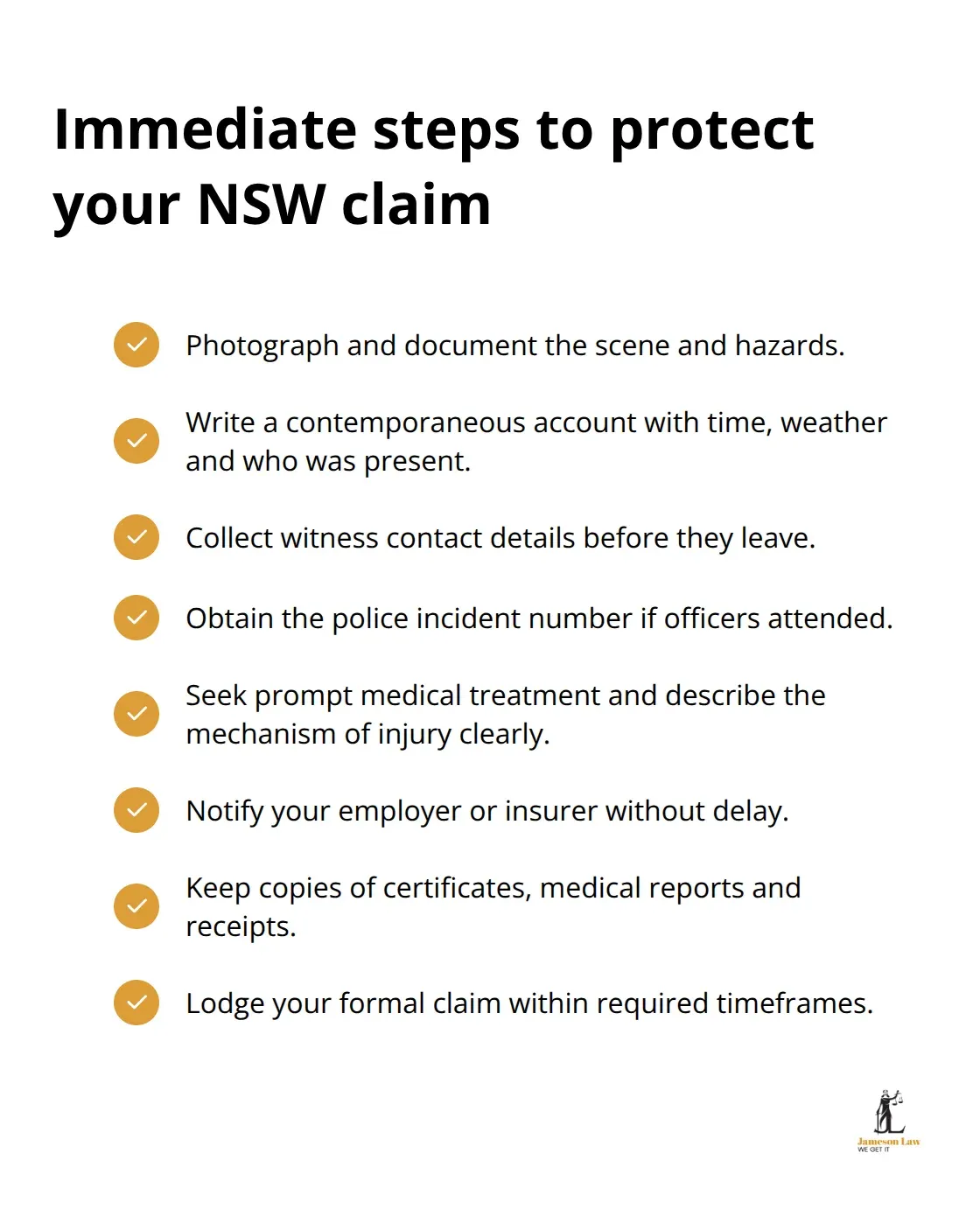
The first hours and days after a personal injury determine whether your claim succeeds. Photograph and document everything relevant to your injury: the location where you fell, the wet floor that caused it, vehicle damage, or malfunctioning equipment. Your phone timestamps these photographs, providing objective proof that courts and insurers trust.
2. Gather Witness Details
Write down what happened while it is fresh. Get contact details from witnesses before they leave the scene, as tracking them down weeks later is nearly impossible. If police attended, obtain the incident report number immediately.
3. Notify Your Employer or Insurer Without Delay
For workplace injuries, your employer is legally required to notify their insurer within 48 hours, but you should notify them in writing within 30 days to firmly protect your claim. For motor accidents, you must notify the CTP insurer promptly. Delaying notification weakens your position because insurers may assume you are fabricating or exaggerating the injuries.
4. Obtain Medical Documentation
Seek medical treatment immediately, even if you feel fine initially. Some injuries develop over days, and early medical records are required to establish legal causation. For workers’ compensation, your doctor must issue a Certificate of Capacity that documents your condition and what work you can safely perform.
5. Seek Legal Advice Before Speaking With Insurers
Insurers are commercially trained to minimise payouts. Obtaining legal advice early in the process prevents costly mistakes, such as accepting inadequate settlement offers or signing documents that waive your statutory rights.
Final Thoughts
Your rights under NSW personal injury compensation law are clear, but they only protect you if you act within the strict statutory deadlines. Workplace injuries, motor accidents, slip-and-fall incidents, and medical negligence all follow different compensation pathways, yet they share one critical requirement: early action preserves evidence and strengthens your position.
Delaying formal notification signals weakness to an insurer and undermines your negotiating leverage. Accepting an early settlement offer without consulting an expert legal team often means accepting far less than you need to cover your long-term recovery.
A successful personal injury compensation NSW claim is built on gathering evidence immediately, adhering to required timeframes, obtaining thorough medical documentation, and securing authoritative representation. At Jameson Law, our highly experienced Sydney team has helped countless residents navigate these complex claims. Do not let your deadline pass—contact us today to understand exactly what you can recover under NSW law.