

A head injury can fundamentally change your life in seconds. Whether it happened on a construction site, during a motor vehicle collision, or due to a hazardous slip and fall, you hold a statutory right to seek comprehensive compensation for your ongoing losses.
At Jameson Law, our expert team helps NSW residents forcefully navigate complex head injury compensation NSW claims. This 2026 guide walks you through the precise legal framework, strict statutory deadlines, and the forensic medical evidence required to win your case.
What Counts as a Compensable Head Injury?
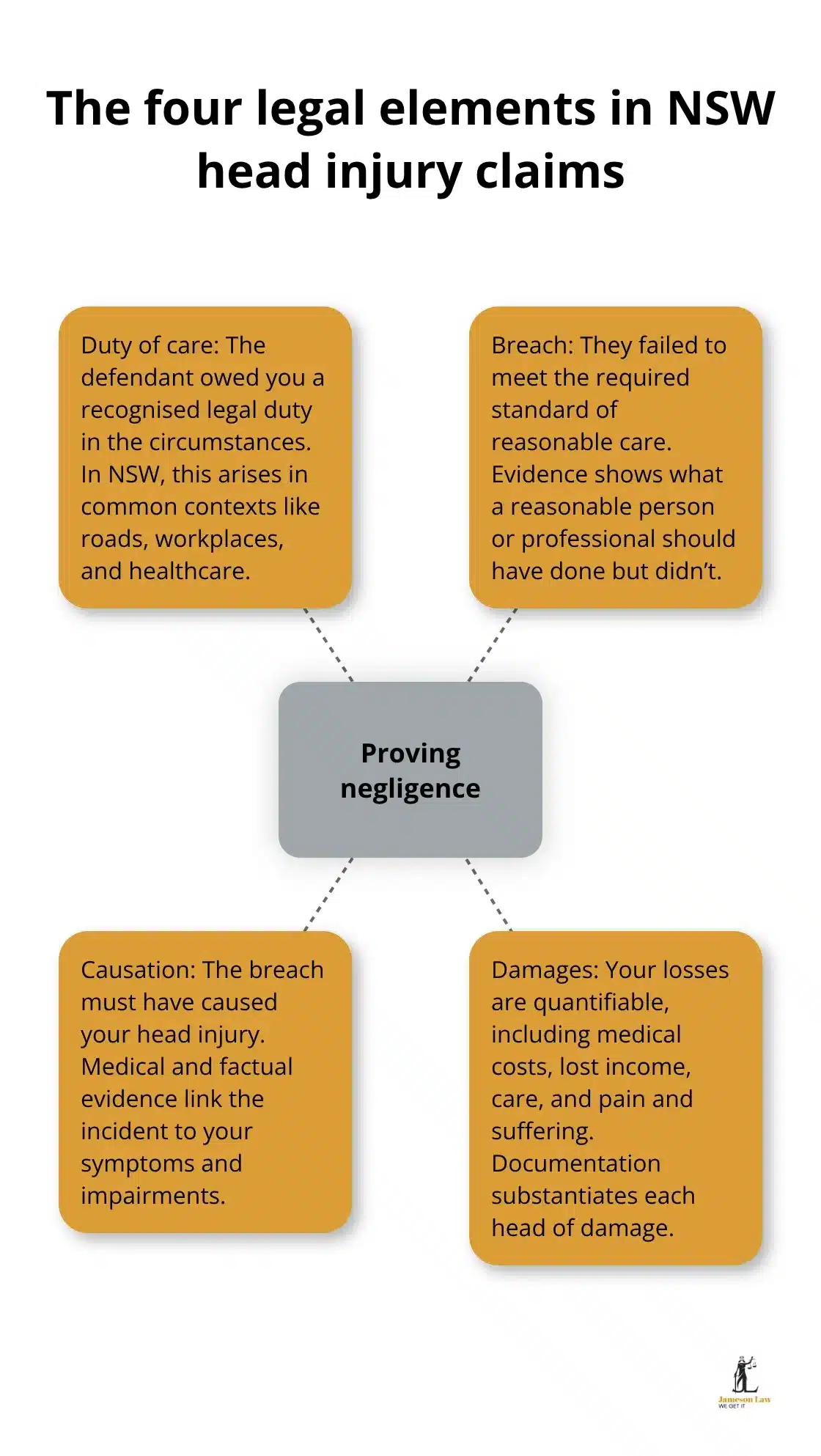
A head injury legally becomes compensable when it was caused by someone else’s negligence. Under the Civil Liability Act 2002 (NSW), your legal team must systematically prove four critical elements to secure a payout:
- Duty of Care: The defendant had a legal obligation to ensure your safety (e.g., a supermarket manager or an employer).
- Breach of Duty: The defendant failed to exercise reasonable care (e.g., ignoring a spill or providing faulty scaffolding).
- Causation: This specific breach directly resulted in your head impact.
- Quantifiable Damages: The injury caused measurable financial or personal loss.
Head injuries range from Acquired Brain Injuries (ABI) resulting from non-traumatic events (like oxygen deprivation due to medical negligence) to Traumatic Brain Injuries (TBI) from direct physical impacts. Even “mild” concussions that trigger long-term cognitive fog, mood instability, or severe migraines are fully compensable.
Strict Deadlines That Can Eliminate Your Rights
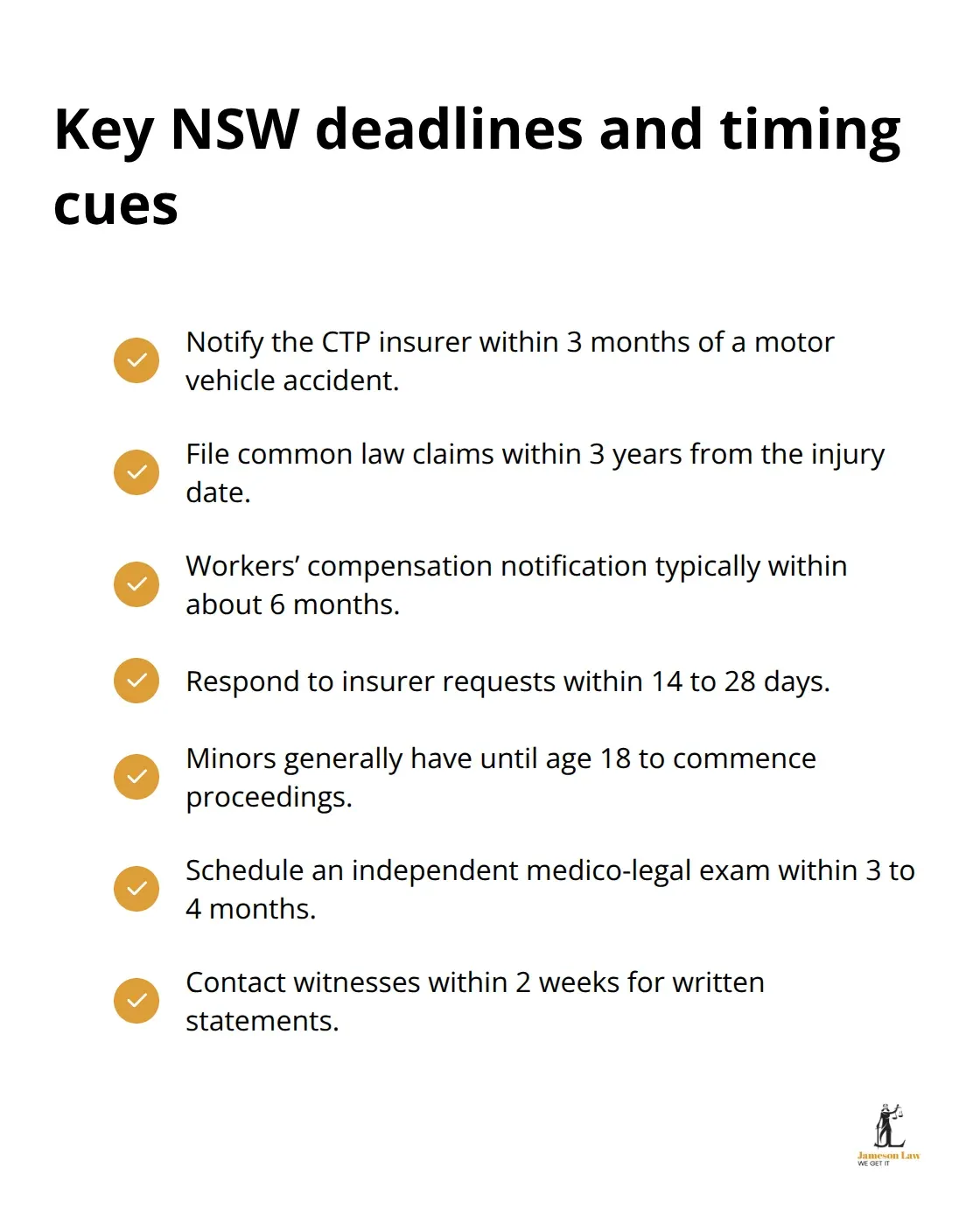
NSW law imposes unforgiving statutory deadlines. Missing these cut-offs will permanently eliminate your right to claim compensation, regardless of how severe your brain injury is.
| Type of Accident | Initial Notification Deadline | Final Legal Time Limit |
|---|---|---|
| Motor Vehicle (CTP) | Lodge application within 3 months. | 3 Years to commence court action. |
| Workers’ Compensation | Notify employer immediately; lodge within 6 months. | 3 Years for Common Law damages. |
| Public / Occupiers Liability | Report incident to venue immediately. | 3 Years from date of discoverability. |
Building Your Case: What Happens After Your Injury?
Securing Independent Medical Evidence
Insurers will aggressively fight head injury claims because lifelong cognitive rehabilitation costs millions of dollars. To counter this, your legal team must secure an Independent Medico-Legal Examination.
This independent specialist will not provide treatment; instead, they will examine you, review your entire medical history, and produce a forensic report quantifying your exact Whole Person Impairment (WPI) percentage. This report acts as the evidentiary bedrock of your claim, preventing insurers from arguing that your symptoms are merely “pre-existing conditions”.
Collecting Supporting Evidence
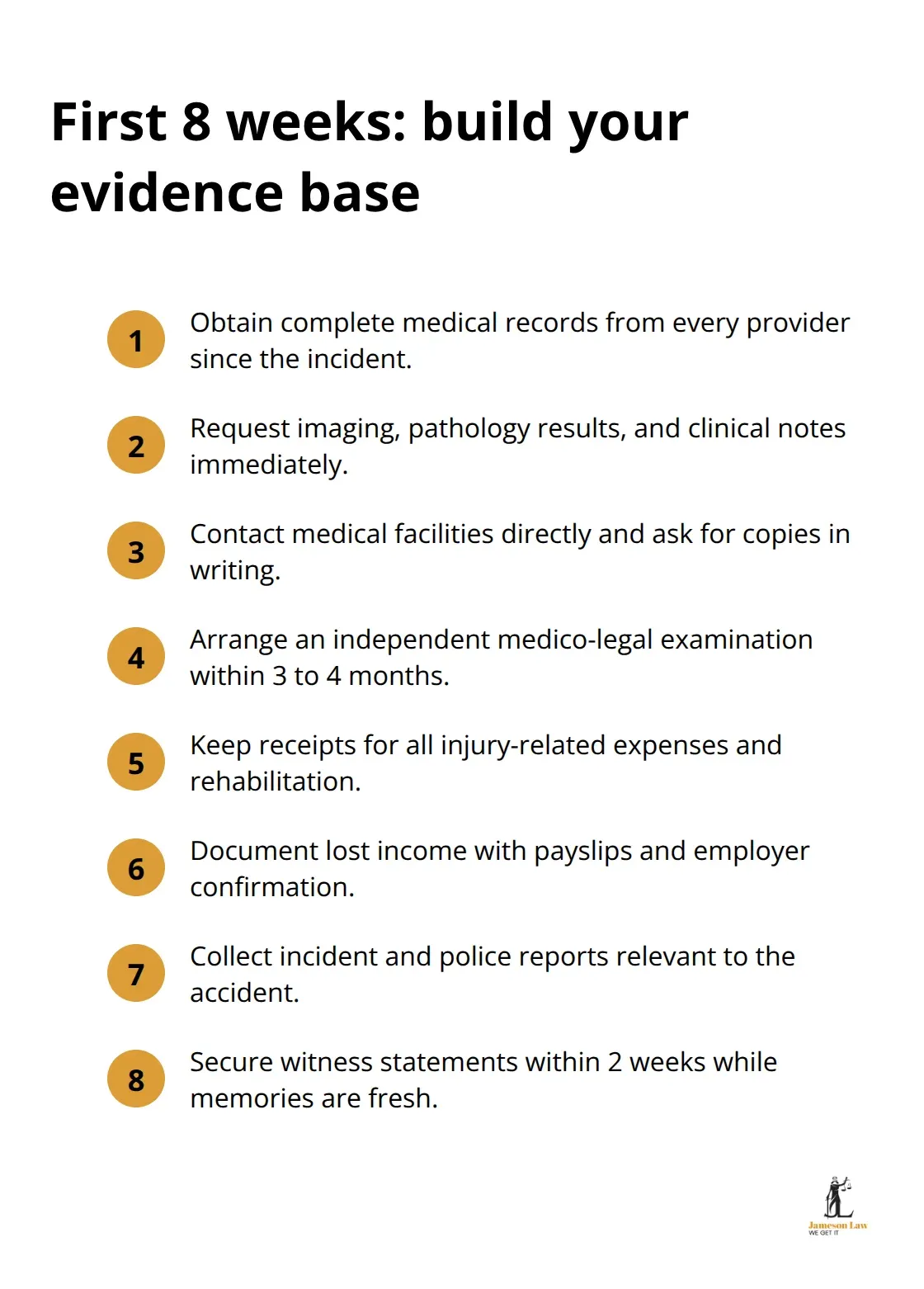
Beyond medical reports, your payout depends entirely on documented financial losses. You must meticulously collect:
- Pre-injury and post-injury payslips or tax returns to prove lost income capacity.
- Receipts for all medications, specialist visits, and travel to medical appointments.
- Quotes and invoices for any necessary home modifications or accessibility equipment.
- Statements from family members detailing the domestic care assistance they now provide you.
What Makes Head Injury Claims So Difficult to Win?
Insurers Will Scrutinise Your Pre-Existing History
Corporate insurers deploy sophisticated strategies to minimize their payouts. The most common tactic is arguing that your cognitive issues, memory loss, or mood changes pre-dated the accident.
They will subpoena your GP records dating back years to search for prior complaints of headaches or stress. A highly experienced personal injury lawyer anticipates this tactic by ensuring your medico-legal reports specifically rule out alternative causes and unequivocally link your current impairment to the accident mechanism.
Navigating the Personal Injury Commission (PIC)
If the insurer refuses to settle fairly, the matter may escalate to the Personal Injury Commission (PIC) or the relevant NSW Court. The PIC imposes extremely strict document limits and filing deadlines. Missing a procedural deadline allows the insurer to exclude your most critical evidence.
Data consistently shows that unrepresented claimants accept significantly lower settlements out of exhaustion or intimidation. A specialized lawyer forces the insurer to value your claim based on established case law precedents, ensuring your compensation fully covers your future medical needs.
Final Thoughts
Head injury compensation NSW claims succeed only when you act decisively within strict statutory timeframes and gather bulletproof medical evidence before insurers can challenge your position. A severe brain injury demands maximum compensation to secure your future financial and medical stability.
Every week that passes weakens your evidentiary position. Insurers will anchor their opening offers deliberately low, betting that you lack the legal expertise to calculate your true lifetime losses. Do not let corporate adjusters dictate the value of your health.
At Jameson Law, our expert Sydney personal injury team operates on a strict No Win, No Fee basis for plaintiff claims, meaning you face zero upfront costs while we fight your legal battles. If you or a loved one has suffered a head injury, contact us immediately for a free, comprehensive claim assessment to protect your rights.