

A workplace injury can turn your life upside down, but you’re not alone in facing it. NSW workers compensation laws give you specific rights, and understanding them is the first step toward protecting yourself.
At Jameson Law, we have helped countless injured workers navigate workers compensation NSW claims and secure the essential support they deserve. This guide walks you through your core entitlements, the statutory claim process, and how to handle common obstacles in 2026.
What You’re Entitled to Receive
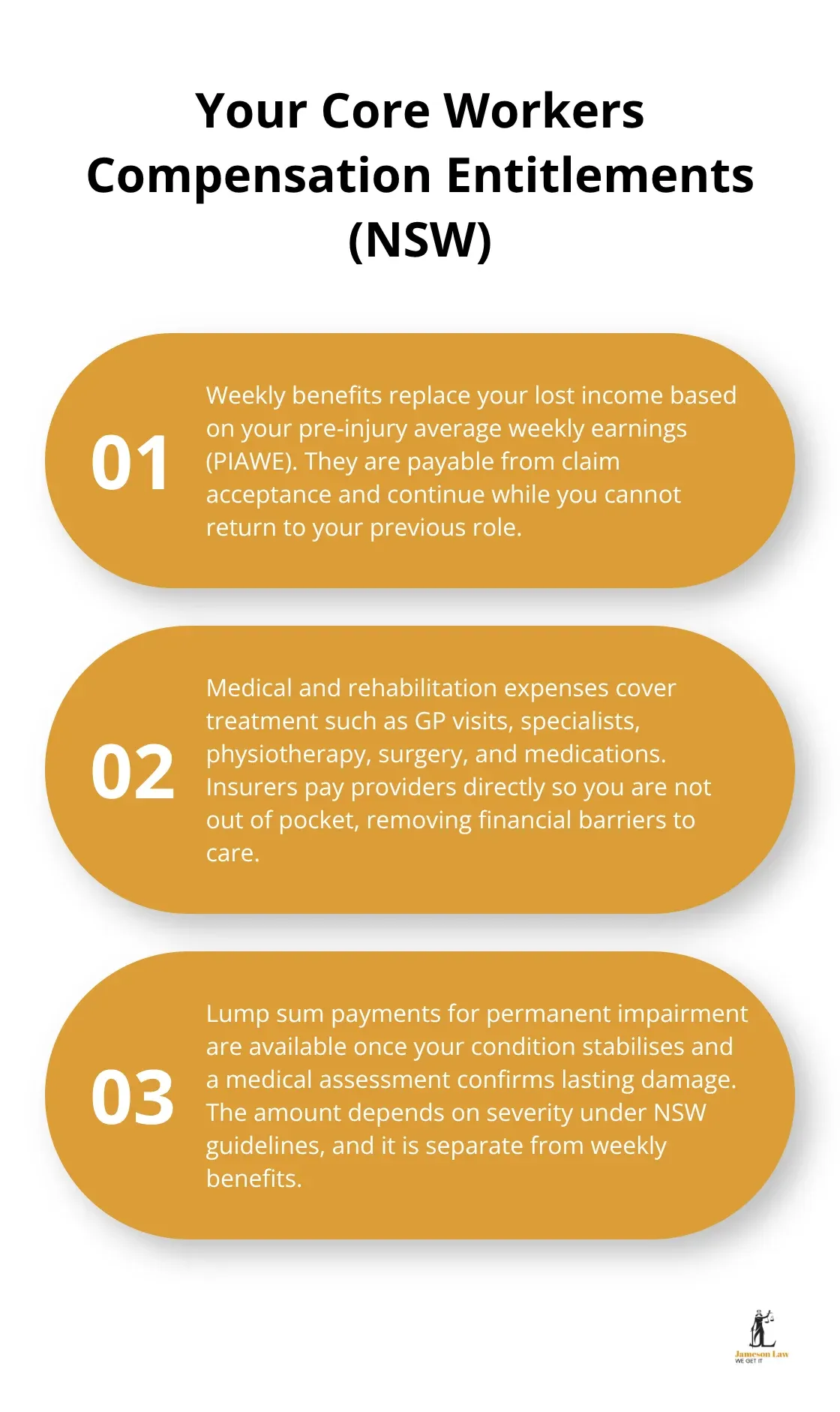
NSW workers compensation covers three main areas of financial and medical support. Understanding what each category encompasses helps you build a substantially stronger claim foundation:
| Entitlement Stream | Core Coverage | Calculation Method |
|---|---|---|
| Weekly Benefits | Income replacement for periods of partial or total incapacity. | Based on Pre-Injury Average Weekly Earnings (PIAWE). |
| Medical Expenses | GP visits, rehabilitation, specialist consults, and surgeries. | Paid directly to approved healthcare providers. |
| Permanent Impairment | Lump sum payouts for lasting physical or psychological damage. | Assessed against strict NSW Whole Body Impairment (WPI) guidelines. |
Weekly Benefits Replace Your Lost Income
Weekly benefits replace your lost income while you’re unable to work, calculated on your pre-injury average weekly earnings (PIAWE). The insurer must pay these from the date your claim receives formal acceptance, continuing for as long as your injury prevents you from working in your previous role.
If you’re able to perform lighter duties or part-time work, your weekly payments reduce proportionally to your new earning capacity. Crucially, this reduction must be based on actual work available to you, not theoretical possibilities. The insurer cannot reduce your payments based on roles that do not genuinely exist in your workplace or wider industry.
Medical and Rehabilitation Expenses
Medical and rehabilitation expenses cover treatment needed to support your recovery, including GP visits, specialist consultations, physiotherapy, surgery, and ongoing medications. The insurer pays these costs directly to approved providers, meaning you do not have to pay upfront and then claim back.
Rehabilitation also includes vocational support if you need retraining for a different career path. The insurer must fund reasonable rehabilitation plans that give you a genuine pathway back to suitable employment. If your injury prevents you from returning to your previous role, the insurer has an obligation to support your operational transition.
Lump Sum Payments for Permanent Impairment
Lump sum payments for permanent impairment become payable once your condition has stabilised and a formal medical assessment confirms lasting damage. The amount depends on the severity of your impairment measured against state statutory guidelines, sitting entirely separate from your ongoing weekly benefits.
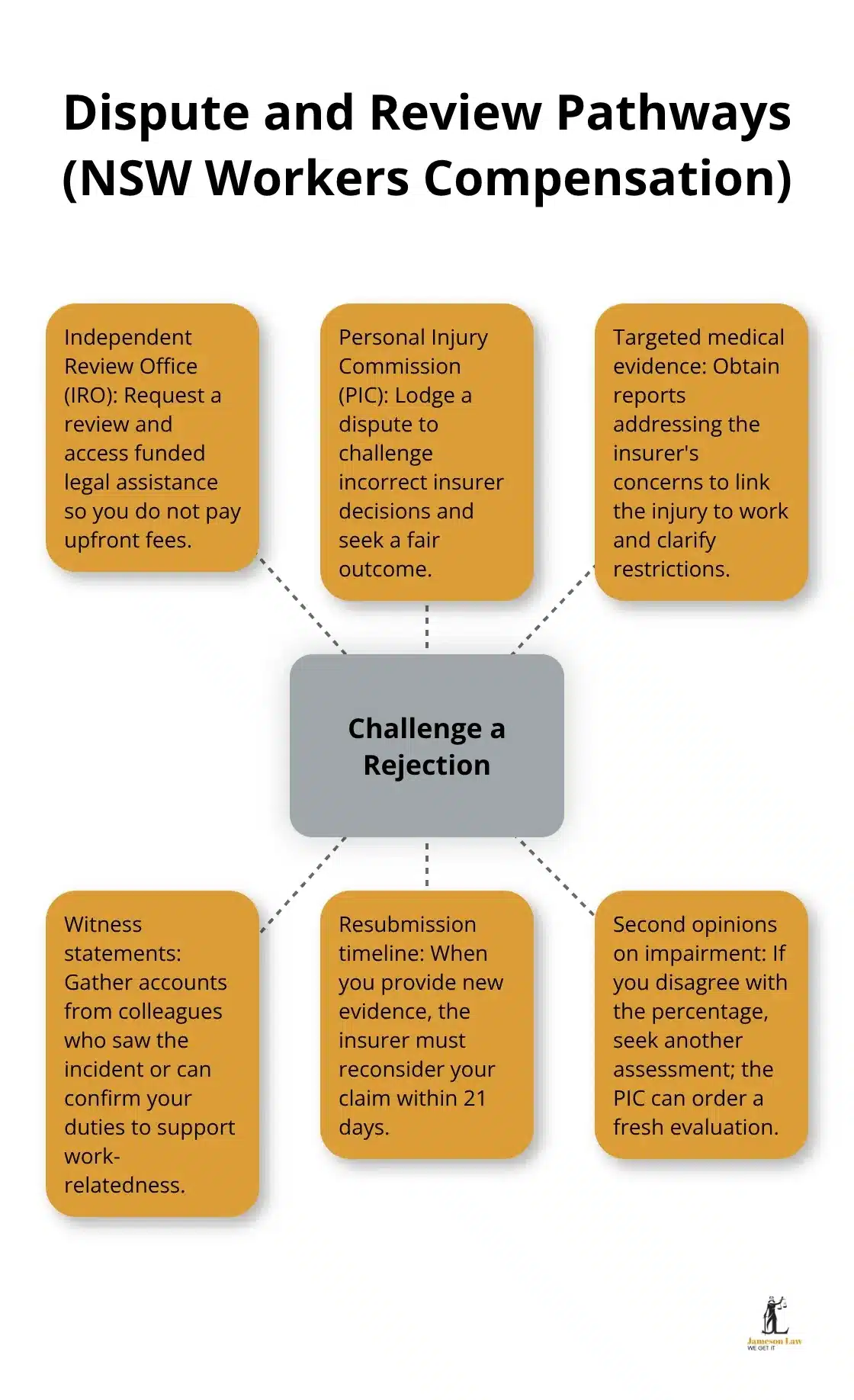
Many injured workers underestimate what they’re entitled to here because they do not understand the assessment process or fail to challenge low initial offers. If an insurer offers a lump sum that seems too low, you have the right to request a second opinion and lodge a dispute through the Personal Injury Commission (PIC).
How to Lodge Your Claim in Three Steps
Step 1: Notify Your Employer Immediately
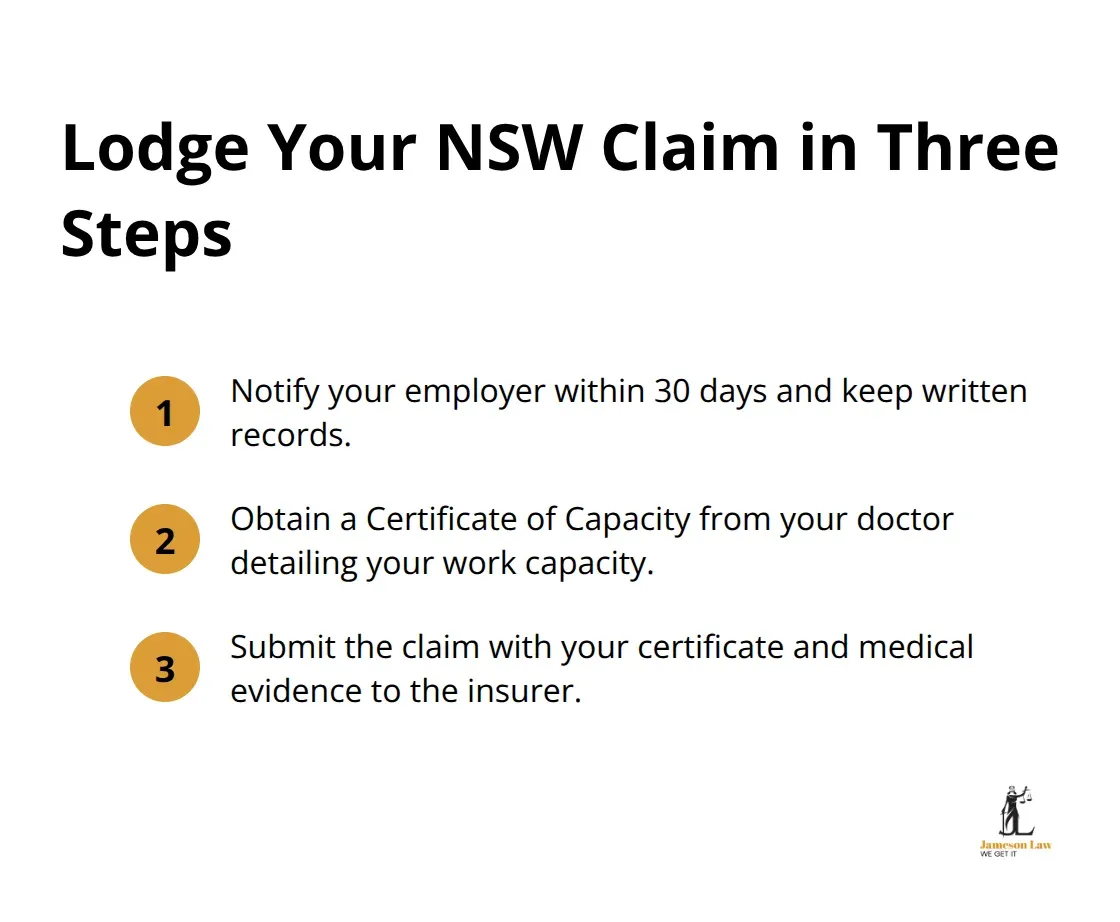
Tell your employer about your injury as soon as possible, ideally within 30 days. This notification starts the clock on your claim timeline and creates a documented record that protects your position later. Provide written notice, either in person with a follow-up email or by letter, stating the date of the injury, how it happened, and which body part is affected.
Your employer then has legal obligations to notify their workers compensation insurer within 48 hours. If your employer delays this process, it does not invalidate your claim, but it can create administrative complications that slow your acceptance decision.
Step 2: Obtain a Certificate of Capacity from Your Doctor
Once you’ve notified your employer, book an appointment with your GP to obtain an official Certificate of Capacity. This document records your current medical condition, what work tasks you can safely perform, and your current capacity percentages.
The Certificate of Capacity is non-negotiable—without it, the insurer will immediately pause the assessment process. Bring detailed information to your doctor about your physical job duties and the exact injury mechanism to make their assessment as specific as possible.
Step 3: Submit Your Claim to the Insurer
You must formally lodge your claim with the employer’s workers compensation insurer within six months of becoming aware of your injury. You will need to submit:
- The completed worker’s insurance claim form.
- Your current Certificate of Capacity.
- All supporting medical records, including scans, specialist letters, and test results.
The insurer must decide on your claim within 21 days of receipt, moving to either accept it, provisionally accept it, or deny it. Provisional acceptance means they commence weekly payments and treatment coverage but may request further records before finalizing permanent liability.
Common Challenges When Your Claim Gets Rejected
Claim rejections happen more often than injured workers expect. Most rejections stem from fixable evidentiary documentation problems rather than legitimate grounds to deny your claim. Insurers frequently dispute gradual onset conditions like repetitive strain or psychological injuries resulting from chronic workplace stress.
When an insurer rejects liability, you have the right to request an independent review. Crucially, the Independent Review Office (IRO) provides non-repayable legal funding (via the ILARS scheme) for injured workers to challenge rejections. This means you do not need to pay upfront legal fees to have an expert personal injury lawyer fight your case at the Personal Injury Commission.
Understanding Impairment Assessments and Disputing Low Outcomes
Impairment assessments determine how much your permanent injury has reduced your baseline bodily function, directly affecting your lump sum payout. A medical assessor chosen from an approved independent panel examines you to assign a Whole Body Impairment (WPI) percentage.
Insurers occasionally pressure workers to accept the first assessment result without questioning its thoroughness. Before accepting any lump sum offer, obtain a copy of the report and have your treating GP review it. If your doctor identifies missed functional limitations, you can dispute the outcome through the Personal Injury Commission, which holds the power to order a independent re-assessment.
Negotiating Settlement Offers That Fall Short
Insurers routinely make low opening offers on lump sums, knowing that many injured workers lack the confidence to challenge them. Before responding, calculate what your historical and future entitlements total across weekly benefits, treatment costs, and medical aids. If an offer falls significantly short, a structured written challenge detailing why each component is insufficient will often compel the insurer to increase their settlement figure to avoid formal arbitration.
Handling Psychological Injury Claims
Psychological injuries arising from severe workplace bullying, harassment, or traumatic exposure are fully claimable under NSW law. However, these files face high initial rejection rates because they require robust clinical records.
Your treating psychiatrist or psychologist must provide precise clinical notes detailing the exact link between the workplace behaviour and your psychological condition. Vague descriptions will fail, but detailed, chronological logs of workplace incidents and their clinical psychological impact will establish a viable claim pathway.
Final Thoughts
Your statutory rights under workers compensation NSW claims are clearly protected by law, but securing them requires proactive execution. You are legally entitled to weekly income replacement, comprehensive medical coverage, and permanent impairment lump sums if your injury leaves lasting damage. Meeting reporting deadlines and submitting decision-ready medical evidence is the key to preventing administrative delays.
Insurer rejections, low settlement offers, and low impairment ratings are common hurdles, but they are entirely challengeable. With IRO legal funding readily available to cover your legal costs at no personal financial risk, there is no reason to navigate an adversarial insurance process alone.
If your claim has been denied, if you require assistance disputing a WPI assessment, or if your settlement negotiations have stalled, contact Jameson Law today. Our highly experienced Sydney personal injury team is here to provide the clear, authoritative guidance you need to protect your recovery and your future.