



Retail theft charges in NSW carry serious consequences that can affect your employment, reputation, and future. Shoplifting charges NSW are prosecuted through a formal court process with specific legal requirements and potential penalties.
Understanding how these cases move through the courts helps you prepare an effective response. We at Jameson Law have guided many clients through retail theft prosecutions and know what to expect at each stage.
What Retail Theft Actually Means Under NSW Law
The Legal Definition and Core Elements
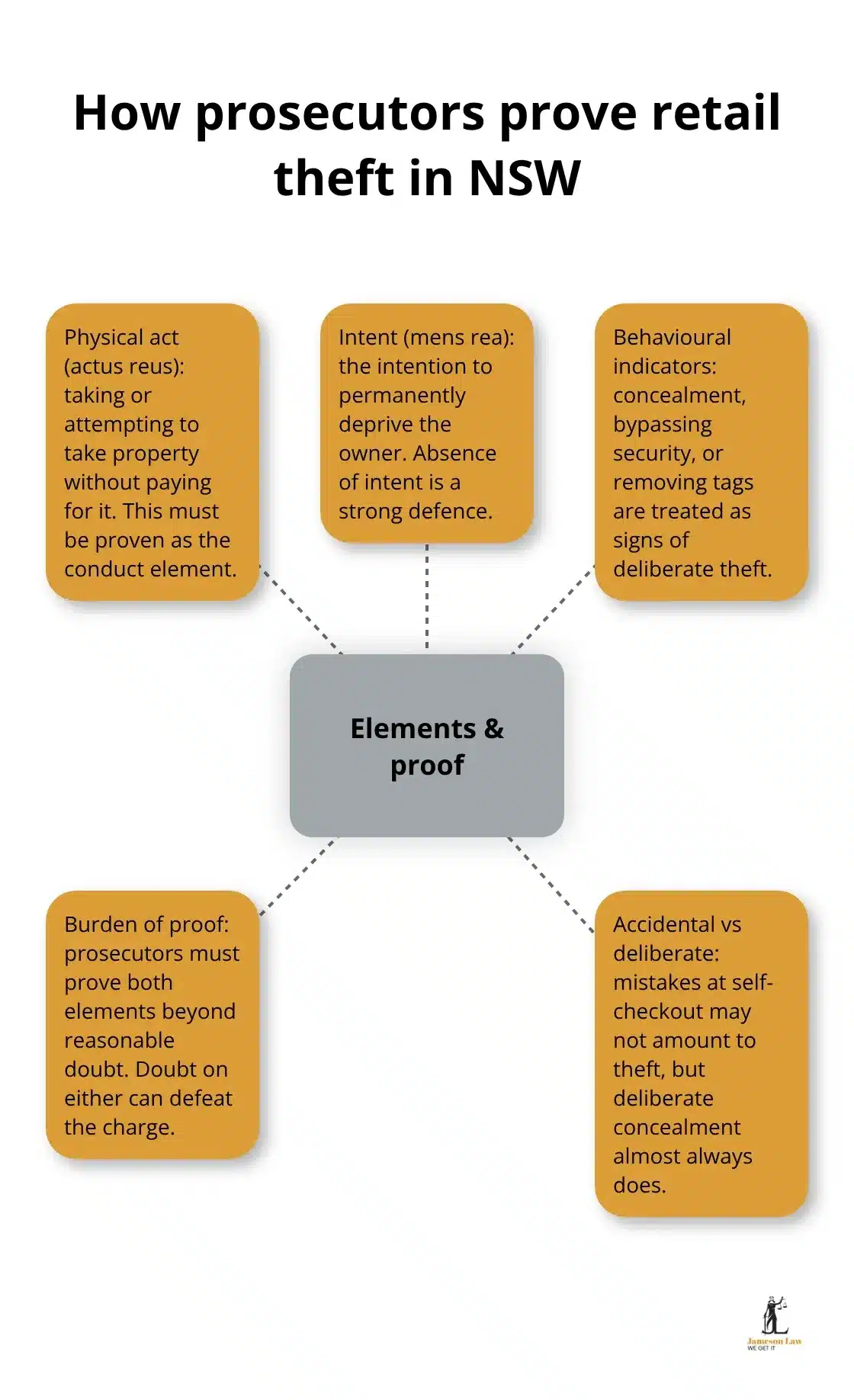
Retail theft in NSW falls under section 117 of the Crimes Act 1900 and involves taking goods from a retail premise with the intention of permanently depriving the owner of them. Prosecutors must prove two essential elements beyond reasonable doubt. The first element is the physical act-you took or attempted to take property without paying for it. The second element is your mental state-you intended to permanently deprive the owner of the goods. This distinction separates retail theft from other offences like fraud or receiving stolen goods. NSW Courts apply a strict approach to these cases, particularly when the offence occurs in high-traffic retail environments such as shopping centres or supermarkets.
The Role of Intent in Retail Theft
What separates retail theft from a genuine mistake at the checkout is the intentional element. If you forgot to pay for an item or misunderstood the self-checkout process, that absence of intent becomes your strongest defence position. Prosecutors, however, argue intent based on observable behaviour-if you concealed items, bypassed security measures, or left the store without attempting to pay, courts interpret these actions as demonstrating intentional theft. The mental element requirement means that accidental removal does not constitute the offence, but deliberate concealment almost always does.
Common Scenarios That Demonstrate Intent
Several scenarios regularly appear in retail theft prosecutions. Deliberately placing items in a handbag without scanning them at self-checkout shows clear intent. Removing security tags before leaving the store demonstrates premeditation. Switching price labels to pay less than the marked amount requires deliberate steps beyond simply picking up merchandise. Each of these actions reveals clear intent because they involve deliberate conduct beyond normal shopping behaviour. Courts have consistently held that the prosecution must prove you knew the goods were not paid for and intended to keep them permanently-mere presence in a store or handling merchandise falls well short of establishing theft.
What the Statistics Show
NSW Police data reveals retail theft charges in recent years, with most cases prosecuted in the Local Court. Penalties for first-time offenders range from fines up to $2,200 or imprisonment for up to 12 months. The prevalence of these charges underscores why understanding the prosecution’s burden of proof matters for your defence strategy. The specific facts of your case-including your actions, statements, and any evidence of intent-will determine whether you face a minor or serious charge.
Moving Forward With Your Defence
The distinction between intentional theft and accidental conduct forms the foundation of your response to charges. Prosecutors must establish both the physical act and your mental state, and weaknesses in either element can significantly affect the outcome. Understanding how courts interpret behaviour and intent positions you to work effectively with your legal team on identifying the strongest defence arguments available to your circumstances.
What Happens After Your Arrest
Your Rights During Police Questioning
When police arrest you for retail theft in NSW, the first critical hours determine how your case progresses. Officers will take you to a police station for questioning about your actions, your intent, and your awareness of store policies. Anything you say during this interview becomes evidence in court. NSW law grants you the right to silence under section 23 of the Crimes Act 1900, and you should exercise this right before answering questions. Requesting legal representation does not imply guilt-it protects your position. Police are trained to extract admissions that prosecutors later use to establish the mental element of theft. Once you make a statement, you cannot simply retract it if your legal team identifies problems with how you answered questions.
Bail Decisions and Court Conditions
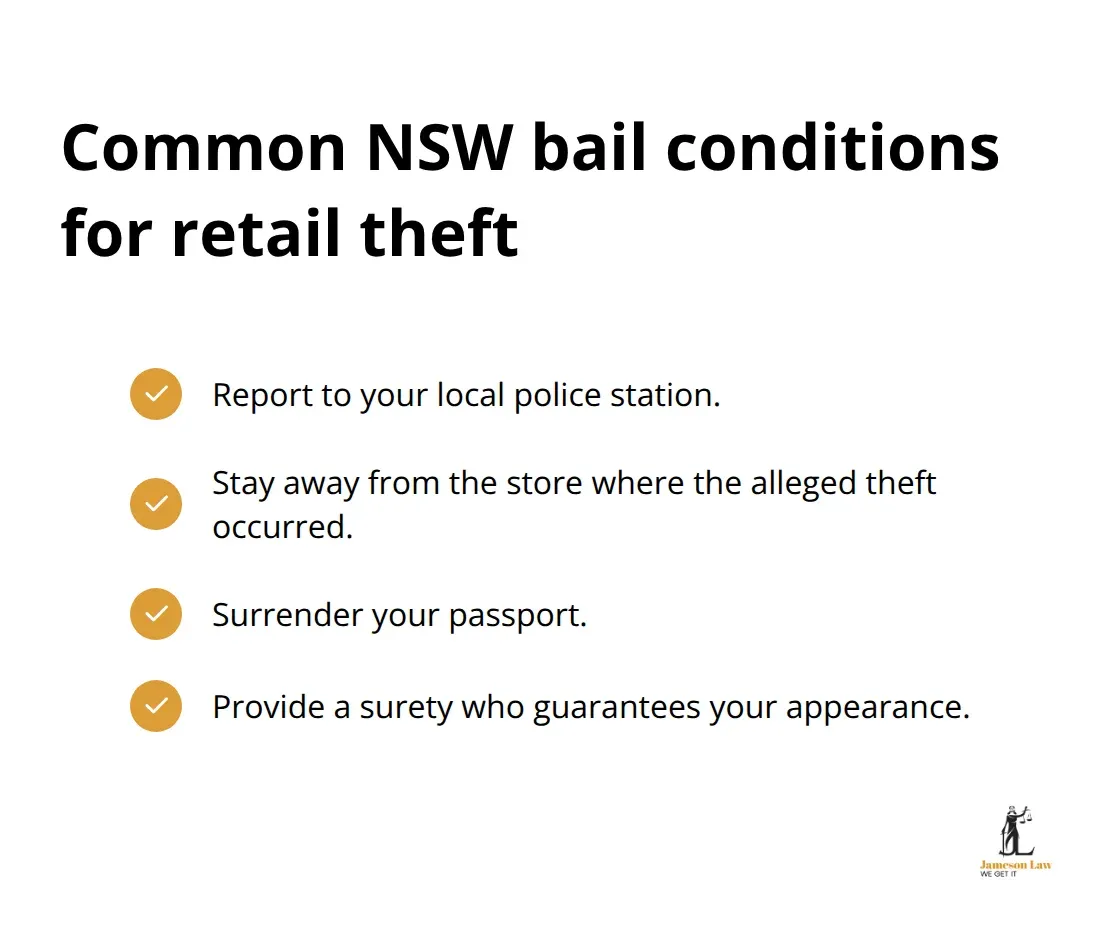
The court assesses your bail application within 24 hours of arrest, and this stage determines whether you remain in custody or return home while your case proceeds. Magistrates evaluate whether you present an unacceptable risk of not appearing in court, committing further offences, or endangering community safety. For retail theft charges, courts typically grant bail with conditions rather than refusing it outright. Common conditions include reporting to police regularly, staying away from the store where the alleged theft occurred, surrendering your passport, or providing a surety who guarantees your appearance. The magistrate considers your employment history, community ties, criminal record, and the specific facts of your alleged offence. If this is your first offence and you have stable employment and family connections in NSW, bail approval is likely.
However, prior theft convictions or previous failures to appear in court increase your flight risk in the magistrate’s assessment.
The Committal Process and Early Evidence
The committal process follows bail, where the prosecution must present evidence sufficient to commit you to trial. For most retail theft cases prosecuted under section 117 of the Crimes Act, the store manager or security officer gives evidence about what they observed. You have the opportunity to cross-examine witnesses and present your own evidence at this stage. Many defendants remain silent during committal proceedings, believing they should save their defence for trial. This approach weakens your position because the magistrate forms early impressions about your credibility and the strength of evidence against you. Presenting your account during committal (even in outline form) allows your legal team to test the prosecution’s case and identify weaknesses early.
Court Jurisdiction and Case Progression
The jurisdiction question matters because retail theft charges can be dealt with summarily in the Local Court or, in serious cases involving high-value goods or organised retail crime, proceed to the District Court. Most first-time offenders face Local Court proceedings, which means faster resolution and generally lower penalties than District Court trials. The specific facts of your case-including the value of goods involved, your criminal history, and whether you acted alone or with others-determine which court handles your matter. Understanding which court will hear your case helps you and your legal team prepare appropriate defence strategies and anticipate potential outcomes.
Defence Strategies and Possible Outcomes
Challenging the Prosecution’s Evidence on Intent
Your defence strategy depends entirely on the specific facts of your arrest and what the prosecution can actually prove in court. The most effective defences challenge the prosecution’s evidence on the mental element or the physical act of taking goods. Lack of intent remains the strongest argument because prosecutors must prove you intended to permanently deprive the store of the goods beyond reasonable doubt.
If you genuinely forgot an item at the checkout or misunderstood the self-checkout process, that absence of intent defeats the charge. However, courts are sceptical of these arguments when CCTV footage shows you deliberately concealing items or bypassing security measures.
Using CCTV and Physical Evidence
The prosecution will present store security footage, witness statements from staff members, and your own statements to police as evidence of intent. Your legal team should request all CCTV footage immediately and review it frame by frame to identify inconsistencies with the prosecution’s version of events.
If the footage shows you reaching for your wallet or asking staff about pricing, that behaviour contradicts any claim you intended to steal. Another viable defence involves challenging whether you actually took the goods at all, particularly in cases where multiple shoppers were present or store procedures were unclear. Some defendants successfully argue that store staff made errors in their observations or that security protocols failed to properly identify them as the person who took the items.
The value of goods matters significantly because courts treat low-value thefts more leniently than high-value ones. If the prosecution overestimated what you allegedly took, that error weakens their case substantially.
Sentencing Outcomes for First-Time and Repeat Offenders
Sentencing for retail theft in NSW varies dramatically based on your criminal history and the circumstances of the offence. First-time offenders with no prior convictions typically receive fines or conditional discharge without conviction, according to sentencing data from NSW District Court judgements.
Repeat offenders face substantially harsher penalties, with imprisonment becoming likely after a second or third conviction. The Crimes Sentencing Procedure Act 1999 requires courts to consider aggravating factors such as acting with others, targeting high-value items, or previous theft convictions. Courts also consider mitigating factors including genuine remorse, early guilty pleas, stable employment, and strong community ties. An early guilty plea can reduce your sentence by up to 25 percent, making this a practical option if the evidence against you is overwhelming.

Diversion Programs and Avoiding Conviction
Diversion programs offer an alternative to court prosecution for eligible offenders, particularly first-time offenders and young people under 25. NSW Police and prosecutors have discretion to divert cases away from court proceedings, and this option avoids a criminal conviction entirely.
Diversion typically involves completing a restorative justice program, attending counselling, or making restitution to the store. If you successfully complete the diversion program, the charges are withdrawn and no conviction is recorded on your criminal record. This outcome is substantially better than a court conviction because employers conducting background checks will not see the offence.
Eligibility for diversion depends on your willingness to accept responsibility, your prior record, and the seriousness of the alleged theft. Discussing diversion options with your legal representative early in proceedings maximises the chance of accessing this pathway before the prosecution decides to proceed with formal charges.
Final Thoughts
Retail theft charges in NSW follow a structured prosecution process with clear legal requirements at each stage. The prosecution must prove both the physical act of taking goods and your intention to permanently deprive the store of them, and weaknesses in either element can significantly affect your case outcome. Understanding how courts interpret behaviour, what happens during police interviews, and how bail decisions work positions you to respond effectively to charges.
A criminal record from shoplifting charges NSW extends consequences far beyond immediate penalties, affecting employment prospects, professional licensing, and your ability to work with vulnerable people. First-time offenders often avoid conviction through diversion programs or conditional discharge, but repeat offenders face substantially harsher sentences including imprisonment. An early guilty plea can reduce your sentence by up to 25 percent, making this a practical consideration if the evidence against you is strong.
Your defence strategy depends entirely on the specific facts of your case, and legal representation matters at every stage of proceedings. Your lawyer protects your rights during police questioning, presents evidence at committal proceedings, and identifies whether diversion programs are available before formal charges proceed. Contact Jameson Law for practical legal advice tailored to your circumstances, and our team will guide you through retail theft prosecutions to identify the strongest defence strategies available.