

Slip and Fall NSW Claims: Your Complete Legal Guide
A slip and fall accident can happen in seconds, leaving you with serious injuries and mounting medical bills. In NSW, property owners have a legal obligation to maintain safe premises, and when they fail to do so, you may have strong grounds for a personal injury claim.
At Jameson Law, our expert team helps injured people in Sydney and across NSW understand their rights and pursue fair compensation. This guide walks you through how liability works, what evidence matters, and the crucial steps involved in making a slip and fall NSW claim.
What Constitutes a Slip and Fall in NSW
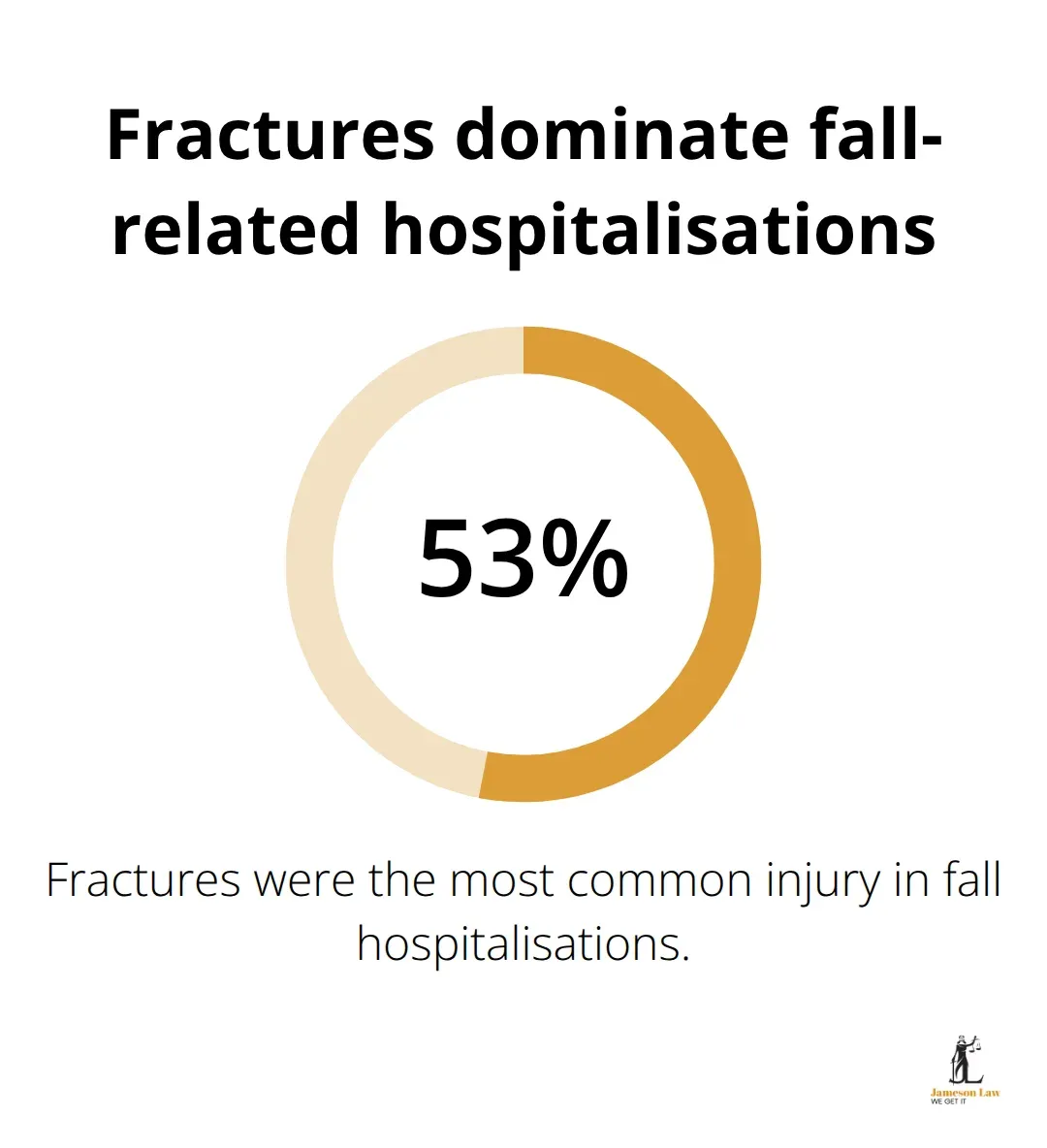
A slip and fall in NSW is far more specific than simply tripping or losing your balance. The Australian Institute of Health and Welfare reports that fractures were the most common type of injury during fall hospitalisations (53%), making them a serious legal and public health concern.
For an incident to form the basis of a public liability claim, it must occur on someone else’s property due to a hazard they controlled or should have reasonably controlled. The Civil Liability Act 2002 (NSW) establishes that property owners and occupiers owe a strict duty of care to visitors.
Where Accidents Most Commonly Occur
Slip and fall claims arise frequently in areas with high foot traffic and multiple cleaning cycles, which means hazards can appear and disappear rapidly.
| Accident Location | Responsible Party | Claim Type |
|---|---|---|
| Shopping Centres, Cafes, Gyms | Commercial Owner / Retail Manager | Public Liability Claim |
| Public Footpaths & Parks | Local Council | Public Liability (Stricter requirements apply) |
| Workplace / Office | Employer / Workers’ Comp Insurer | Workers’ Compensation Claim |
Workplace Falls: A Different Path
If your slip and fall occurs at work, you cannot pursue a standard public liability claim against your employer in NSW. Instead, you would claim workers’ compensation through the State Insurance Regulatory Authority (SIRA) framework, regardless of fault. This distinction matters because workplace injuries follow entirely different rules and compensation caps.
Proving the Owner Knew or Should Have Known
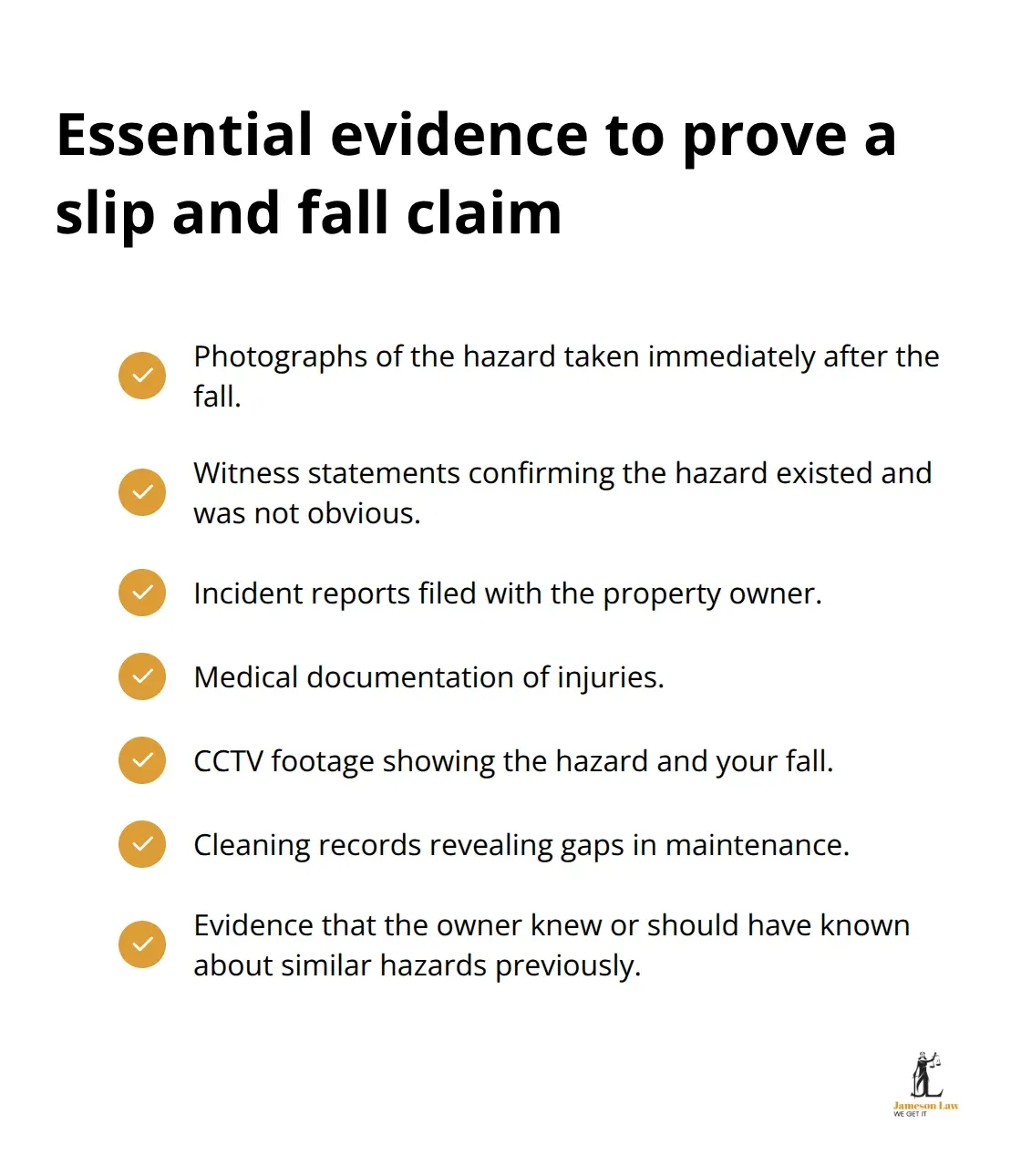
The timing of a hazard significantly affects your claim. If a spill occurred seconds before your fall, proving the owner was negligent becomes harder because they had no reasonable opportunity to act. Conversely, if CCTV footage or cleaning records show a hazard existed for hours, liability becomes much clearer.
Legal Standard: Section 5B of the Civil Liability Act sets the standard: what would a reasonable person in the same circumstances have done? If a supermarket manager failed to conduct regular floor inspections, negligence is evident.
Establishing Liability in Slip and Fall Claims
Establishing liability requires you to prove four distinct elements under NSW law: the property owner owed you a duty of care, they breached that duty, their breach caused your injuries, and you suffered measurable damages.
Proving Breach of Duty
Courts examine whether the hazard was long-standing or temporary, whether the owner had systems to detect it, and whether staff members should have spotted it. A wet floor in a shopping centre during rainy weather with no warning signs points to clear negligence. The same wet floor with clear signage, staff actively monitoring, and documented inspection logs points away from negligence.
Common Defences Property Owners Raise
Property owners and their insurers aggressively defend slip and fall claims. Common defences include:
- Obvious Risks (Section 5H): Arguing the hazard was obvious, though courts interpret this narrowly. A wet floor is not automatically obvious if the owner failed to place warning signs.
- Contributory Negligence (Section 5R): Allowing courts to reduce your compensation if you were partly at fault, such as wearing unsuitable footwear or running. This does not eliminate your claim but may reduce your payout.
How to Lodge and Strengthen Your Slip and Fall Claim
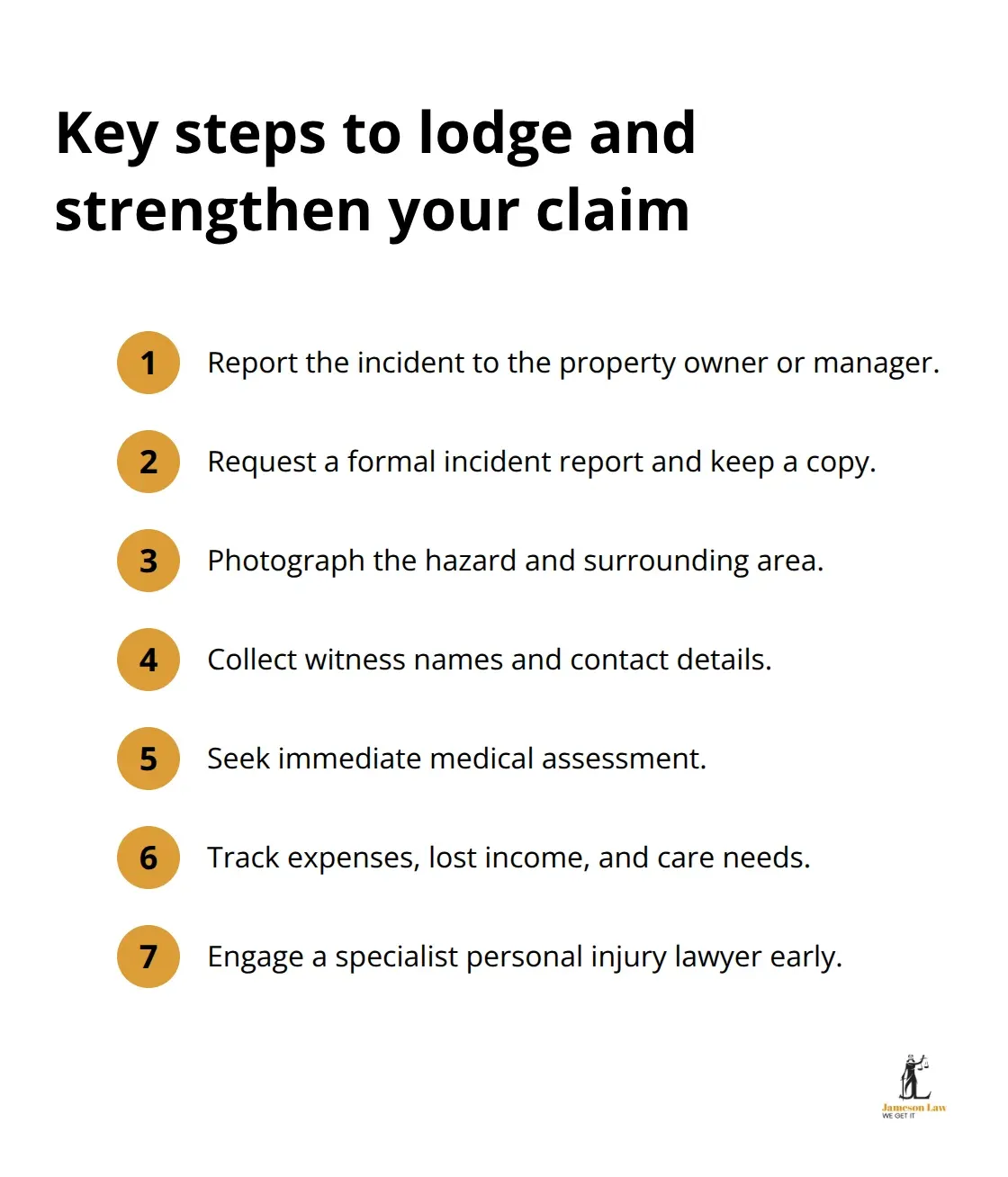
The strongest slip and fall claims combine multiple evidence types. To protect your rights, follow these critical steps immediately after an accident:
- Report the Incident Immediately: Report the fall to the property owner or manager on the day it happens. Request a formal incident report to create an official paper trail. Do not wait days or weeks.
- Photograph the Scene: Take photographs of the hazard (spills, uneven surfaces, broken steps), the surrounding area, and any visible injuries before you leave. Check for nearby CCTV cameras.
- Collect Witness Information: Gather the names and phone numbers of any witnesses. Independent witness statements corroborate your account significantly.
- Seek Medical Assessment: Visit a hospital or GP immediately. Falls can cause injuries that emerge hours later. A medical report creates the documentary evidence needed to link your injuries directly to the incident.
- Gather Financial Records: Collect all receipts for medical expenses, prescriptions, physiotherapy, and track any days you missed work to calculate lost income.
Do not accept an early settlement offer before your injuries have stabilised. Injuries can worsen over weeks or months, and accepting compensation prematurely means you cannot claim additional damages later.
Final Thoughts
Slip and fall NSW claims succeed when you combine strong evidence with timely action. The foundation of any successful claim rests on proving the property owner owed you a duty of care, breached that duty, and caused your injuries. Preserving CCTV footage, photographing the hazard, and securing medical documentation are non-negotiable steps.
It is critical to note that the Limitation Act 1969 (NSW) applies a strict three-year time limit to most personal injury claims. Waiting months or years weakens your position because evidence fades and witnesses become harder to locate.
Engaging a highly experienced personal injury lawyer significantly improves your outcome. At Jameson Law, we meticulously prepare your claim, negotiate aggressively with the property owner’s insurer, and fight for compensation that reflects your actual economic and non-economic losses. Contact our expert Sydney team today to discuss your slip and fall claim and protect your future.